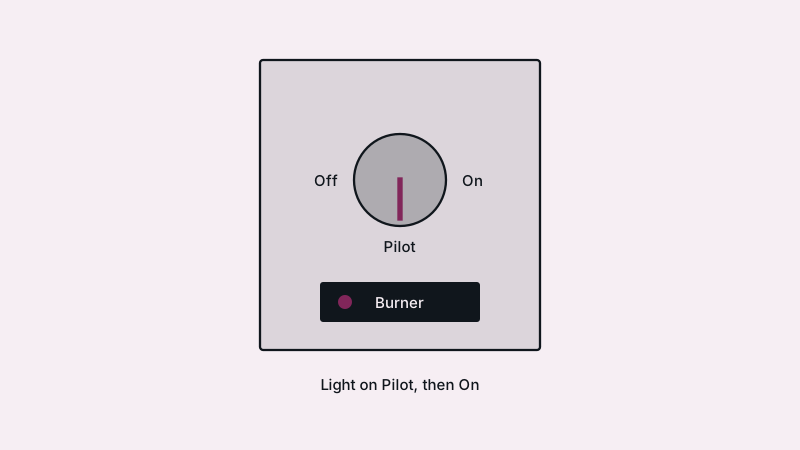
Cold showers and a dark window at the bottom of the heater usually mean the pilot flame went out. Gas tank heaters keep a small flame burning to light the main burner, and a safety sensor shuts off the gas if that flame disappears. So a dead pilot is the heater protecting you, not necessarily a broken part. You can relight it once, using the steps printed on your unit. One flame that will not hold is a symptom, and what could be behind it comes next. For the bigger picture, the water heater repair hub shows where to go next.
Is it safe for me to relight my own pilot light?
Yes, provided you smell no gas, the label prints relight steps, and you follow them to the letter. A gas odor ends the plan: walk outside, put the SoCalGas number (1-800-427-2200) to use, and add 911 if anyone feels at risk. Never test for gas with a flame.
Check first:
- No rotten-egg odor near the heater or in the garage.
- The area is free of paint thinner, gasoline or other vapors, which can ignite.
- The heater's access panel and burner area are dry and clear of lint.
- You can read the label. If not, stop.
If everything is clear, relighting once is fair. A second failure means the cause is mechanical.
What are the relight steps?
Off, wait five minutes, Pilot, hold the knob in while you click the igniter, keep holding for about a minute once the flame appears, release slowly, then On. That is the usual order. Whatever your heater's own label says wins over this list.
- Set the knob to Off, and give it five minutes so stray gas clears.
- Turn to Pilot.
- Press and hold the knob down.
- Press the igniter button repeatedly, or hold a long lighter to the pilot if the label says to, until the flame appears.
- Hold the knob down for another half minute to a minute while the safety sensor warms.
- Release the knob. The flame should stay.
- Turn to On and set the temperature.
On newer heaters with a sealed combustion chamber, you light through a small window or use a built-in igniter, so read the label. Gas closed at the meter? Leave it closed and let SoCalGas reopen it. The utility also lists a pilot relight service on its website, and checking its current terms is worth a minute before paying for a visit over a simple relight.
Why does the flame keep dying?
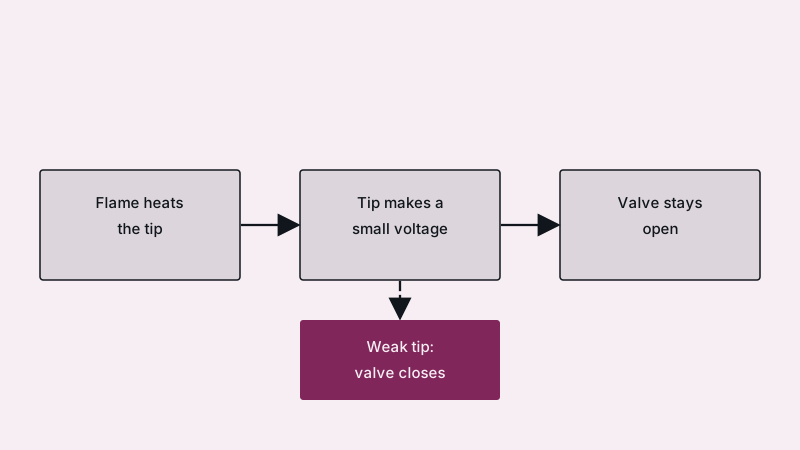
Common culprits are a tired thermocouple or thermopile, a pilot tube choked with dust, a draft, or a gas control on its way out. The sensor has to keep the gas valve held open, and a weak one lets go. Wind through the garage door or a blocked vent can also snuff the flame.
Work through them:
- Weak sensor. On older units a thermocouple reads the flame, and it wears out. It is a cheap part and a routine swap.
- Dirty pilot tube. Soot or dust narrows the opening, and the flame shrinks. Cleaning it takes tools and care.
- Draft or vent trouble. A strong gust, a blocked flue or a back-drafting vent can disturb the flame. Flue problems can release carbon monoxide.
- Gas control. If a new sensor changes nothing, suspect the control itself, a larger repair.
- Low gas supply. A closed or partly shut valve upstream starves the pilot.
A flame that is yellow, large or flickering, with soot around the burner, should be looked at by a professional rather than adjusted at home.
Can I fit a new thermocouple myself?
A patient owner can, yet a gas fitting is involved, so plenty of people book a plumber instead. The outline: close the gas, unscrew the old part at the control and pilot bracket, fit the matching new one, snug it finger-tight and a hair more, then relight and test for leaks.
Know where the legal line sits. California regulates gas piping and appliance hookups, and a contractor license becomes mandatory at $1,000. A thermocouple costs far less, so an owner may do it. A gas valve, line or vent change is not a weekend project.
Always check for gas at the connection with soapy water after any gas work. Bubbles mean a leak. Shut off the gas and call a professional.
Does a pilot problem mean the heater is nearly finished?
Sometimes. When it comes down to one cheap sensor, the fix is simple. If the heater is also rusty, leaking, rumbling from sediment, or well beyond a dozen years old, the pilot issue may be one of several signs that replacement is near. See no hot water but heating works for other causes of cold showers.
Weigh the repair against the age. A 4-year-old heater deserves a new sensor. A 14-year-old tank with a failing control valve may not. New-heater prices sit on the replacement cost page.
When does a pilot problem become an emergency?
If you smell gas, see soot on the heater, feel a headache or dizziness near the heater, or hear a roaring flame, treat it as urgent. Get everyone outside, then phone SoCalGas, and 911 if anyone feels ill. Carbon monoxide is odorless, which is why a working CO alarm matters.
Earthquake shutoff valves can also stop gas. If the house shut off during a quake, do not relight until you check for leaks, and let SoCalGas restore service if it was shut at the meter. For the valve itself, see resetting the quake shutoff.
If a local plumber should take a look, the price request form takes a photo of the label too.
Common questions
What does a pilot repair usually cost?
A thermocouple is an inexpensive part, and labor is usually the larger share. A new gas control is pricier. Prices depend on the model and the visit. The quote should split parts and labor, and say whether the work includes testing for leaks and checking the vent.
Is a blue pilot flame normal?
Yes. A steady blue flame with a small yellow tip is typical. A mostly yellow, large or flickering flame can mean poor combustion or a draft. Do not adjust it yourself. Soot on the burner or near the flue means the heater should be inspected.
Why does the pilot go out when the wind blows?
A garage door, a vent opening or a back-draft can disturb the flame. Check that the door seals, that nothing blocks the air supply, and that the flue is clear. If the problem is a flue or vent fault, it can release carbon monoxide, so have it checked.
Can a pilot flame starve for gas?
Not in a normal supply, since the pilot sips a tiny amount from the line. If gas is shut at the valve or meter, though, there is no flame. Check that the heater's own valve and the supply valve are open before you assume a part is bad.
Does an electric water heater have a pilot light?
No. Electric tank heaters heat with elements, so cold water there points to a tripped breaker, an element that burned out or a faulty thermostat, and the guide to no hot water with an electric heater walks through the tests, which differ from anything on a gas unit.
For the wider picture, start with Capistrano Plumbing.
Sources
Updated