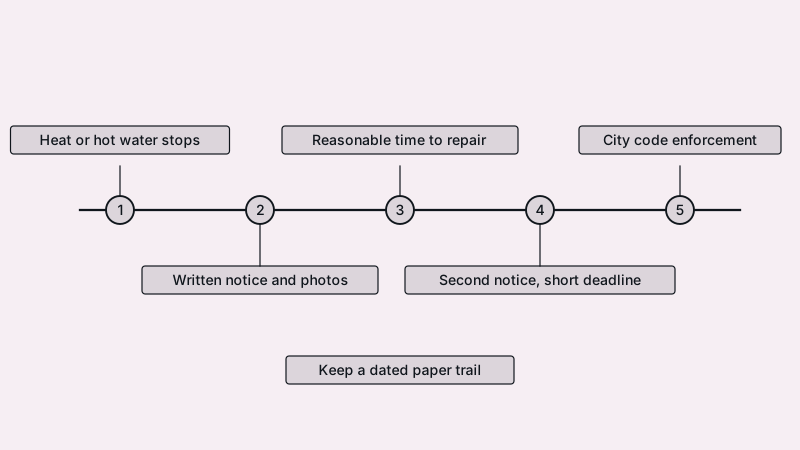
In California a landlord cannot leave a rental without hot water. Civil Code 1941.1 treats a home as untenantable when the supply cannot give hot as well as cold, or when plumbing and heating no longer work. A cold-only apartment is therefore a repair the landlord owes, not a favor. Steps follow in order. For the heater itself, see the water heater repair hub. This is general information and not legal advice.
Does state law really make the landlord supply hot water?
It does. Section 1941.1 of the Civil Code names, as a mark of an untenantable home, water that cannot be delivered hot and cold to the fixtures and tied to an approved sewer. Failing plumbing and heating sit on the same list, and the landlord must keep them working.
State housing law agrees. Health and Safety Code 17920.3 calls a unit substandard when fixtures lack hot and cold running water, or adequate heating, to the extent that it endangers occupants. A heater serving the whole building is the owner's equipment too.
The legal words matter little in the first conversation. What matters is the paper trail you build, so the next sections are ordered by what to do first.
What comes first when the heat in the shower disappears?
Confirm it is the heater, not just your unit, tell the landlord or manager at once, and write it down. Dated photos and a note stating when it stopped create the record. Send it by email or text so it carries a timestamp, and keep a copy for yourself.
A neighbor can settle the first question in a central-system building. A cold building points to the shared heater or boiler. A cold unit alone may mean a unit heater, a mixing valve or a closed shutoff. Our no hot water causes page lists the checks, and a washer that fills cold is a separate fault. Leave the landlord's heater alone.
Put these in the message:
- Name, address and unit number.
- When the hot water stopped, and whether every tap is affected.
- A request for repair and a date for a reply.
- Photos, such as a thermometer reading or the heater's label.
How long does a landlord have to fix it?
California sets no flat deadline for no hot water. The test is a reasonable time. For repair and deduct, Civil Code 1942 presumes 30 days after notice is reasonable, while allowing a shorter period when circumstances demand it. Lacking hot water is the sort of condition that can justify less.
In practice the first step is a clear written request and a short deadline, such as a few days. Many landlords act at once because a failed heater in a larger building draws more complaints. If a few days pass with no answer, send a second written notice and keep records of every contact. Legal aid offices and a tenant organization can tell you what a court would likely see as reasonable in your case.
Can I fix it myself and take the cost out of the rent?
In limited cases only. Section 1942 lets a renter arrange the repair and subtract the bill from rent once a landlord has sat on an untenantable condition past a reasonable time after notice. The bill cannot exceed a month's rent, and the option is available no more than twice a year.
It is a narrow tool and easy to misuse. A new tank can cost more than a month's rent, and a shared system is not a tenant's to repair. Heaters involve gas and electrical work that calls for a contractor, and often a permit. The other option 1942 gives is moving out, which ends the rent obligation from the move-out date. Talk to a tenant advocate or attorney before using either. A plumber arranged through us can quote repair work, but pay and permit steps depend on the landlord's agreement.
Can the landlord punish me for complaining?
State law limits it. Civil Code 1942.5 stops a landlord from raising the rent, cutting services, filing an eviction or forcing you out for 180 days after a good-faith repair notice or a habitability complaint, whether to the landlord or an agency, provided you are not behind on rent. You can use the protection once in 12 months.
The section also allows damages, and punitive damages of $100 to $2,000 per retaliatory act where fraud, oppression or malice is shown. Keep your rent current, because the 180-day protection is for tenants who are not in default. If a landlord responds with a rent increase or an eviction notice after you complain, speak to a tenant attorney or legal aid promptly. It does not stop an eviction for a lawful cause.
Where else can I turn if nothing happens?
Report the condition to the city's building or code enforcement office, which can inspect substandard housing. Mission Viejo City Hall answers on (949) 470-3000, and its building services run permits and inspections. Each nearby city runs its own office, so contact the one covering the building's address.
Legal aid and a local tenant organization can give advice at no cost or low cost, and the court's self-help center covers small claims. A complaint to an agency also starts the 180-day protection in Civil Code 1942.5 if the landlord knows about it. A heater that leaks or smells of gas goes to the landlord and the utility first. The emergency water heater repair page explains what counts as urgent. Anyone who smells gas should step outside and report it to SoCalGas.
What if I own the unit, as with a condo?
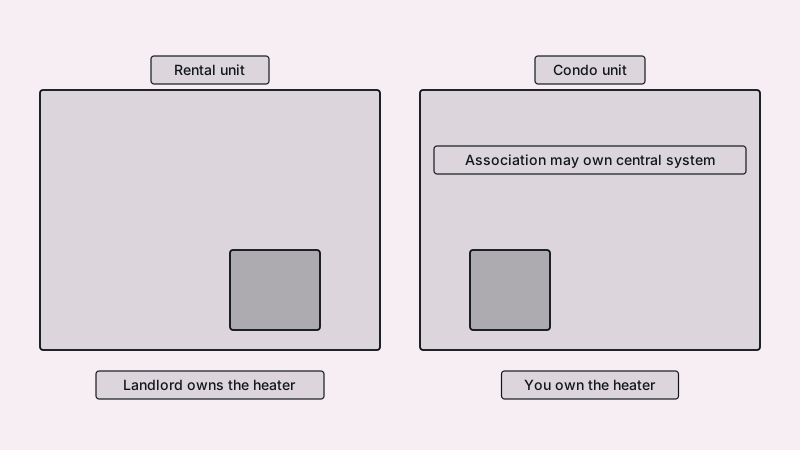
Then the water heater is usually yours, unless the building has a central system run by the association. Check the association rules and where the heater sits first. An owner can hire a plumber directly, and replacement usually needs a permit. Look at the water heater permit page and replacement cost guide, or send a quote request.
Common questions
Does the landlord have to pay for hotel or hot showers while it is fixed?
California law does not set a standard payment for temporary hot water. Some leases do, and some landlords offer a rent credit or access to showers. Ask in writing, keep receipts for extra costs and talk to a tenant advocate about whether a claim is worth making. The agreement you reach should also be in writing.
Can I just stop paying rent until it is fixed?
Not unilaterally. Withholding is risky, and falling behind costs you the 180-day shield in section 1942.5. The legal route is the repair-and-deduct rule, which comes with limits. Speak with a tenant attorney or legal aid before you decide anything, and keep paying while you ask.
How urgent is the repair for the landlord?
It is a habitability problem the landlord must fix, and any delay is reasonable only while they are visibly working on it. A building-wide outage, a leak or a gas smell raises the urgency. Put the request in writing, list the dates and ask for a date by which it will be fixed.
Is heating covered as well?
Yes. Civil Code 1941.1 lists heating facilities in good working order as part of habitability, and Health and Safety Code 17920.3 names lack of adequate heating as a substandard condition. A building with a failed boiler can mean both hot water and heat are out. A heater that works but does not warm is covered by our no hot water but heating works page.
This guide is one of many on Mission Viejo plumber.
Sources
Updated