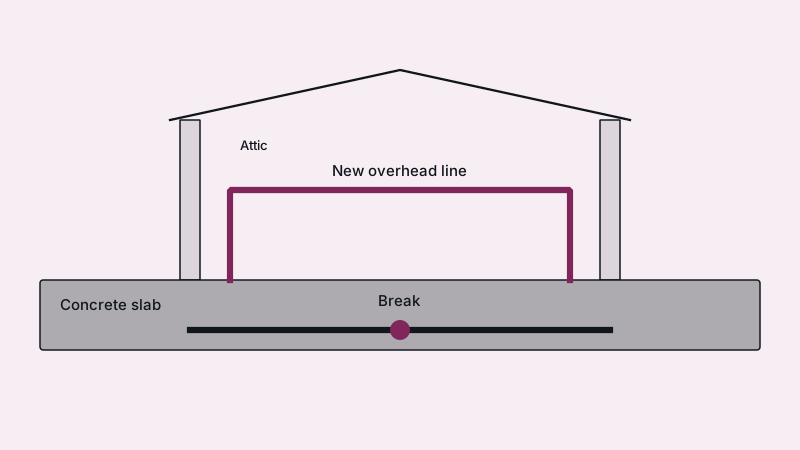
If water lines under your slab leak once, the question is whether it is one failure or the first of many. A single break in otherwise healthy pipe is usually a spot repair. A second break, or pipe of a type known to fail, points toward rerouting or a repipe. The wider picture sits on the leaks page, and the request form is where you ask us to line up a local plumber.
Below: how to confirm a slab leak, the three repair routes, and how a decision gets made.
How can I tell a slab leak from a leak in the wall?
Water hiding under concrete shows itself in a handful of ways: tiles that feel warm underfoot, a faint hiss rising from the floor with taps closed, a meter dial that creeps without stopping, a bill that suddenly climbs, or carpet that smells damp. The meter test proves a leak exists. A detection visit finds the spot.
The EPA's check works: write down the meter, leave the taps alone for two hours, and compare. Any difference means water is escaping. Then close the house's own main valve and watch the dial. If it still moves, the loss is on the utility side of your valve. A dial that stays still puts the leak indoors: slab, wall or fixture.
Temperature is a second clue. A warm spot, or a hot tap that is slow to heat, points at the hot line. Cold-side leaks rarely warm the floor.
What are my options: spot repair, reroute or repipe?
Three routes exist. Open the concrete above the break and splice the pipe. Or retire the leaking run and feed those fixtures from a fresh line overhead. Or renew every supply line in the house. Spot repair is quickest when there is one break, rerouting skips the jackhammer, and a repipe ends a failing system.
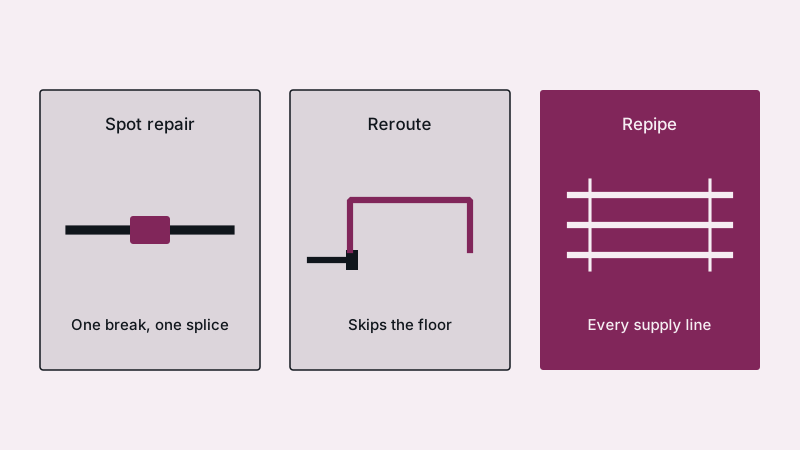
Spot repair. Detection marks the break, the floor is cut open over it, a fresh section of pipe is spliced in, and the slab is patched. Flooring above the patch then needs replacing or matching.
Reroute. The underground run is capped. New pipe climbs into the attic or runs inside walls to the same fixtures, so floors stay whole. Labor can exceed a spot repair, but the weak buried pipe is out of service for good.
Repipe. Every supply line is replaced, normally with PEX or copper. See PEX vs copper for the trade-offs, and the house repipe page for the process.
For a Mission Viejo tract home, the usual choice is spot repair for a first leak in decent copper, and rerouting or a repipe when leaks recur.
When does a repipe beat repairing the leak?
A repipe makes sense once the pipe is aging everywhere, not at a single unlucky spot. Clues: a second leak within a few years, pinholes in copper you can see, green or blue crust, polybutylene, or weak pressure all over the house. Patching tired pipe buys time, not a cure.
Think about how much life the pipe has left. Copper can pit through from the inside, and a house showing that pattern tends to leak again. Signs are laid out in the copper pinhole leak guide. Homes plumbed in gray polybutylene, installed from about 1978 until the mid-1990s, are covered under polybutylene replacement.
Cost helps the decision, though we do not post figures we cannot source. The slab leak repair cost and repipe cost pages break down what moves the price. Request the spot repair and the repipe on one estimate so the two sit side by side.
What should happen before anyone breaks the floor?
If the leak is serious, close the main, then arrange detection before any demolition. Specialists use listening gear, thermal cameras or tracer gas to place the break. Nobody should cut concrete on a hunch: a wrong hole costs money and may find nothing.
Until the visit happens, keep the water off where you can. Seepage beneath a house is not something to leave running for weeks, and damp walls invite mold. Should the hot side be leaking, switching off the water heater stops it from heating a leaking line.
Detection pricing is covered at leak detection cost.
How long does repairing a slab leak take, and will the house be disturbed?
A spot repair takes a day or two, plus time for the patch to cure and the floor to be finished. Rerouting is similar. A whole-house repipe runs several days with the water off for stretches. Expect dust, concrete saws and moved furniture, and ask the plumber for the timetable at the start.
Settle who handles the floor covering. Tile matches only if spare tile survives. Hardwood and laminate often need a section lifted and rejoined.
Ask about drying too. If water reached walls or flooring, drying equipment may be needed, which is usually a separate trade from plumbing.
Will my homeowner's policy pay for a slab leak?
Frequently it pays for resulting damage, not the pipe repair, but wording differs between policies. Some carve out leaks beneath the foundation, others cover only sudden events. Read the policy, phone the insurer before approving demolition, and save photos and the detection report. The insurance explainer goes deeper.
Insurers tend to ask for a written plumber's report, so request one the day the leak is located. If you plan to claim, keep damaged flooring until the adjuster has looked or accepted photos.
Does this work need a permit?
Rerouting and repiping change the water supply, which commonly brings a permit plus an inspection by the Building Division. Check with the City of Mission Viejo before work starts; the contractor normally applies. Contractor licensing begins above $1,000, so request the number and verify it on the state's board site.
Deposits are limited by state rules, and anyone asking for the whole sum before starting is waving a red flag.
If you are comparing providers first, the slab leak repair companies page explains what to ask.
Common questions
What does repiping a slab-on-grade house involve?
The usual method leaves the buried lines unused and feeds the house with new PEX or copper from the attic, down through the walls. No concrete is broken. Access holes in drywall get patched afterwards. Get the route and the list of walls to be opened in writing before you sign.
Can a concrete slab leak be repaired without breaking the floor?
Sometimes. A reroute overhead leaves the floor alone. Certain firms also line pipe from the inside, but that suits particular cases, and no standard method for household supply lines was confirmed in our reading. If a contractor proposes it, ask for examples and for any warranty on paper.
Can a plumber locate a slab leak without digging?
Yes, in most cases. Listening equipment, a thermal camera or tracer gas can narrow the break to a small patch of floor. You can help by running the meter test and noting where the floor is warm or where you hear water.
Does a slab leak mean my whole house needs repiping?
Not by default. A lone leak in healthy pipe is usually mended locally. Repeat leaks, pinholes elsewhere or polybutylene push toward repiping. Have the plumber inspect any pipe visible in the garage or attic, and describe its condition, before recommending anything large.
Is a leaking concrete roof slab a plumbing job?
Rarely. Flat concrete roofs are uncommon on houses in this area, and the cure is waterproofing rather than pipework. For water arriving through a ceiling, read ceiling water leaks; you may need a roofer or waterproofing contractor instead, and a plumber can rule out pipes first.
More services are listed on plumber mission viejo.
Sources
Updated