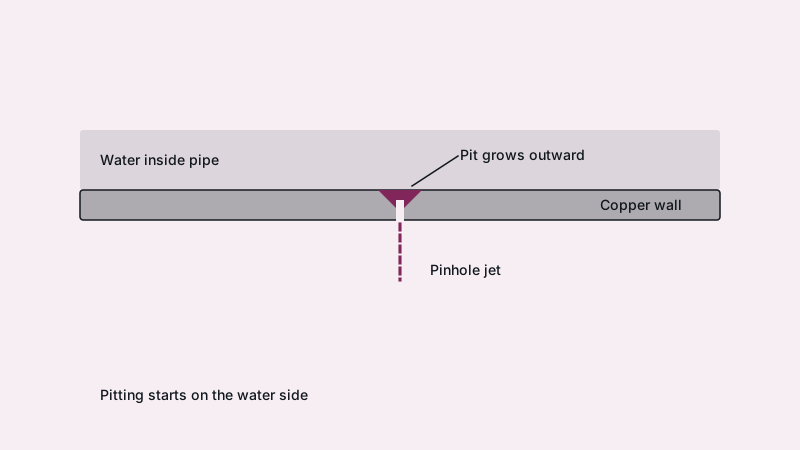
Imagine a pinprick-sized opening in a copper tube, left behind when corrosion finally eats all the way through from inside. It might spray a fine jet within a wall, drip behind cabinets, or sit unseen under a slab. The pipe itself is the question: if one spot has pitted through, others may be close behind. The wider page on leaks in Mission Viejo homes covers tracing and stopping water in general.
What causes a pinhole leak in copper?
Pitting corrosion, a localized attack that starts on the water side of the pipe and drills outward. Researchers say the specific causes are not settled. Water chemistry, surface contaminants left from manufacturing or soldering, and microbial activity are the usual suspects, alone or together. A system can hold plenty of pits long before the first leak appears.
Two reports are worth knowing. A Maryland task force study says the causes of pinhole leaks have yet to be determined, though water chemistry appears to be a possible stimulant. A builder technote reaches a similar view: water chemistry is known to affect how pits form and grow. Pitting occurs in cold lines and in hot lines, in two different forms. Type L pipe has a thicker wall than Type M, so the same corrosion takes longer to break through.
Why do some Mission Viejo homes see more of these?
Age and plumbing choices. Many homes here were built from the 1960s through the 1990s with copper supply lines that have now had decades of exposure. Water hardness varies by district and street, and your district's yearly report lists it. Hardness is not itself the proven cause, so do not assume it is.
What local conditions add is a long service life and the cost of ignoring it: pipes in slabs are hard to inspect, and pinholes there can run for months before a warm floor or a water bill reveals them. If your neighbors have had pinhole repairs, that is a useful warning, though each house depends on its pipe, solder and use. A plumber can examine a cut section and tell you whether corrosion is general or limited.
How do I find a pinhole leak?
Close every tap and watch the water meter. If it keeps moving, water is escaping. Then look for wet drywall, stained ceilings, a damp or warm patch on the floor, mineral crust on a pipe, a sound of hissing at night, or a bill that crept up. In a wall, the leak may be a spray that wets only the back of the drywall.
Water districts publish meter-check steps, and the piping from the meter to the house is generally the owner's to repair. To narrow the spot, a plumber uses acoustic equipment and pressure tests, and detection is often billed separately, as in leak detection cost. Never cut into a wall without turning the water off, and keep clear of electrical wiring.
Can I fix a pinhole leak myself?
A clamp, epoxy putty or self-bonding tape can hold a pinhole until the real repair, and the pinhole repair walkthrough shows each stage. The permanent version removes the damaged length and joins in fresh copper with solder or a press fitting. Torch work inside a wall is a fire hazard, which is why many owners hand it over.
A temporary patch is a deadline, not a repair. A pinhole frequently signals thin metal nearby, so the patch can let go unannounced. Shut the supply at the house valve while working, empty the line, and keep an extinguisher within reach if a torch is involved. Spot repairs on reachable pipe are modest in cost, as the pricing section shows.
Should I repair it or repipe the house?
A single leak in a reachable pipe normally gets a spot repair. Pinholes that keep appearing, in different rooms or close together in time, make a repipe worth pricing. Before recommending either, a plumber studies the inside of a cut section, the remaining wall thickness and the pattern of past leaks.
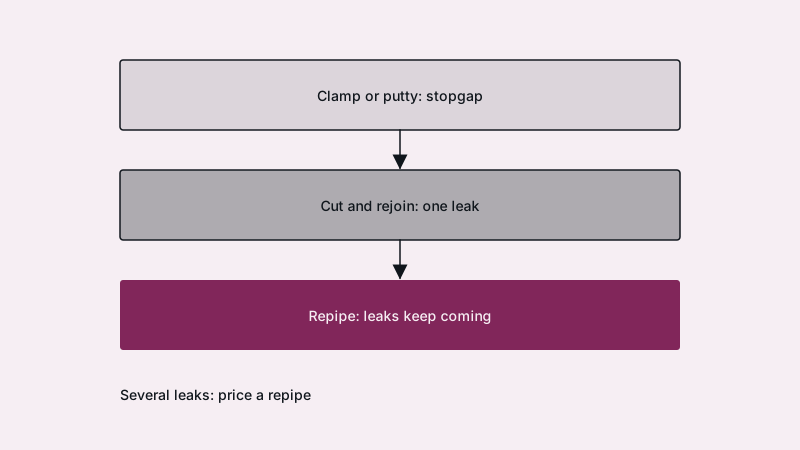
A sensible approach: after one leak, repair it; after several in a short span, ask for a repipe quote; for leaks in a slab or wall, price both a reroute and a repipe. PEX is a common replacement, and the trade-offs are in PEX versus copper and why repipe a house. The spot-repair-versus-repipe call under concrete is argued in slab leak repair or repipe, and prices are in repipe cost and PEX repipe cost.
What does fixing a pinhole run in dollars?
The written quote sets the price, and it arrives once somebody has seen the pipe. A spot repair on accessible pipe costs less than a slab leak, detection and wall patching are usually priced on top, and a full repipe is a much larger job. Ask what each line of the quote covers and who restores any opened wall.
A contractor license becomes mandatory at $1,000 of work in California, so verify the number with CSLB before agreeing to anything. Insurance may pay for water damage after a sudden break but often not for the pipe; see burst pipe coverage. Ask for a visit on the price request page. The Capistrano Plumbing home page outlines the process, and leaking pipe repair covers the repair side.
Common questions
Does a pinhole stay small?
Usually not. Flowing water wears the edges of the hole, and the harm behind it, from sodden insulation to ruined drywall, keeps growing. Close the house valve on finding one and arrange the repair soon, since even a thin leak can bring mold or rot in a matter of weeks.
Is hard water the cause?
Not proven. Hard water leaves scale and affects pipes, but pinhole leaks have been linked to several factors, and research says the cause is not settled. A water test and an inspection of cut pipe give more information than guessing. Your water district's quality reports list its water quality, which you can compare with your own findings.
Can a water filter or treatment stop pinholes?
Treating the water may help in some cases where chemistry is the issue, but it cannot repair pitting that has already happened, and results vary. Ask a plumber what the cut pipe shows before spending on treatment. A repipe changes the material and ends the problem for that line.
Does homeowner insurance cover pinhole leaks?
Many policies cover sudden water damage while excluding the corroded pipe itself, and slow leaks may be left out. Report the leak promptly, keep photos and the plumber's written findings, and read the policy wording or ask your insurer directly. The adjuster decides on the facts of your claim.
Is PEX immune to pinholes?
PEX does not corrode like metal, so it avoids pitting from corrosion. It has its own care points, such as fittings, sunlight exposure and installation quality. Plumbers commonly use it for repipes, but it brings a different set of risks, not an absence of them. Ask which fitting system the plumber uses.
Sources
Updated