People repipe for one reason: the pipes are wearing out from the inside, so every repair buys a few months and the next leak is already forming. If you have a single failed joint, you fix the joint. If the material is the problem, you replace the material. This page lists the situations where a whole-house job is the sensible call, and how the repiping service fits those homes in Mission Viejo, where many houses were built from the 1970s into the 1990s.
What is the telltale sign that pipes are failing, not just leaking?
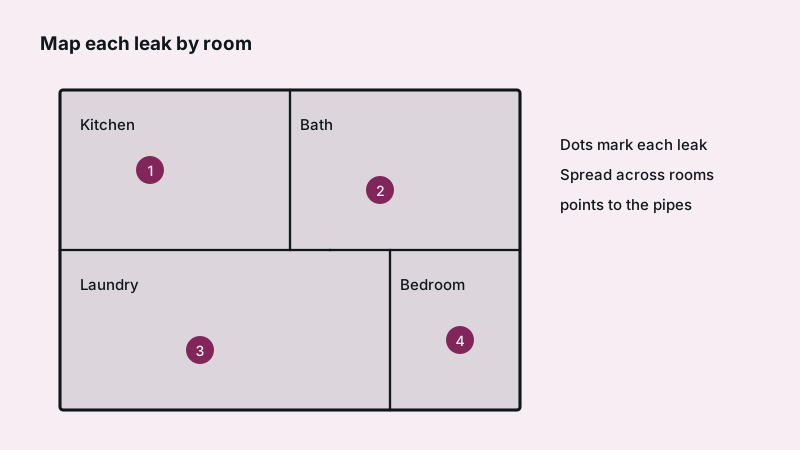
Repeat leaks in different places. One leak is an accident. Pinholes in two or three spots within a year, rust-colored water, or pressure that sags house-wide say the material is going. Pipe that fails everywhere will keep failing, and each repair opens walls that a repipe would open once.
Track it for a month. Note each leak, its location and the date. A list with five entries and five different rooms makes the case better than any sales pitch.
Is polybutylene a reason to repipe?
Yes, in most cases. Poly-B went into millions of US and Canadian houses between roughly 1978 and 1997, and chlorine in tap water degrades it from within. You cannot see that damage. Some pipe splits within a handful of years, other runs last decades, so no one can predict yours.
It matters in this area because tracts from that period are common here. Gray or blue plastic pipe at the water heater or main shutoff, often with stamped letters such as PB, is the clue. If you find it, read the guide on polybutylene replacement. Some insurers ask about it, and a seller completing California's disclosure form must report known defects, so it can complicate a sale.
Do pinholes in copper mean the whole system must go?
Not always, but a pattern does. A single pinhole can be a one-off from a defect or a bad solder joint. A second and third in the same year mean the inner wall is thinning everywhere along the line. Copper often serves for decades, and what shortens its life is water chemistry, velocity and age.
A stopgap exists while the pipe is otherwise healthy, described in the copper pinhole fix. If the leaks keep coming, the sources on copper pinhole leaks explain why replacement is the lasting answer. A plumber can sometimes cut a section open and show you the pitted inside.
Do galvanized steel pipes ever need replacing?
Yes. Galvanized steel rusts from within, narrows over time and sheds orange water and low pressure. It is uncommon in homes built in the last 50 years, but older additions, detached garages and laundry rooms can still contain it. Once flow is choked, repair does not reverse it, and replacement does.
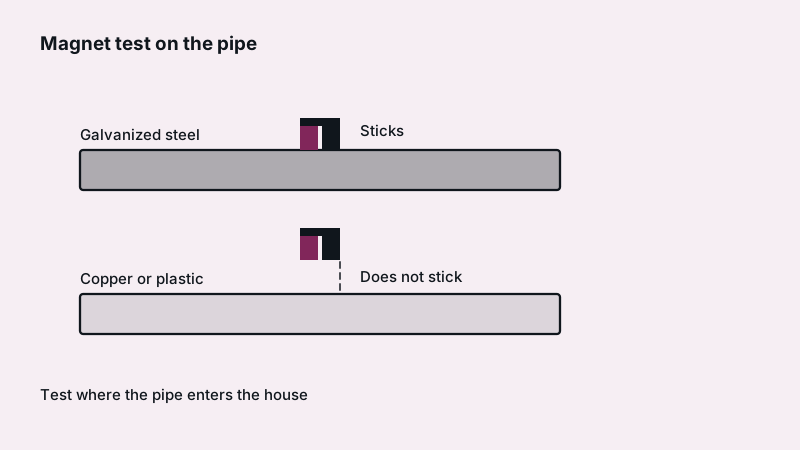
Look at where your pipe enters the house and at exposed runs in the garage. Hold a refrigerator magnet to it: steel grabs, copper and plastic do not. More on that path is in galvanized pipe replacement.
How does a repipe fix low water pressure and dirty water?
If the pressure complaint comes from narrowed pipe, new pipe restores flow. Rust, scale and corrosion shrink the opening inside old metal pipe, and no regulator can undo that. Brown or orange water at the tap on first use points to corroding iron or steel. Clear water that stays weak points elsewhere.
Start with the cheap suspects: a half-closed main, a worn regulator, clogged aerators. Why house pressure drops runs through the tests. A repipe is the fix only when the pipe is the cause.
What does a new system get you that old pipe cannot?
Fresh PEX or copper takes the buried-failure worry off the table for a long stretch, and it lets the plumber correct awkward routing. Fewer joints mean fewer leak points. PEX is flexible and resists scale, while copper is rigid and has a long record. Each has fans, so see PEX vs copper.
Benefits people notice:
- Steadier pressure at the far bath.
- Clean water without rust.
- No more surprise stains on a ceiling.
- A smaller leak risk while you are away.
The EPA's figure for leaks in an ordinary household is more than 9,300 gallons yearly. A house full of weeping fittings loses far more, and the bill shows it.
When is a repipe not the right answer?
If the leak is a single joint, a failed fixture supply or a slab leak in one line, targeted work may do. Slab leaks sometimes call for rerouting just that line instead of everything, a trade-off explored under slab leak: fix or repipe. Before you agree to the full job, have someone test the system.
Warning signs that someone is overselling:
- No inspection or pressure test before the quote.
- A price offered over the phone with no visit.
- Pressure to pay a large deposit.
In California a deposit on home improvement work is limited by state law to the smaller of two numbers: 10 percent of the price, or $1,000. Above $1,000 in work, a state contractor license comes into play.
What does it cost, and how disruptive is it?
Expect a few working days, with some hours of each without water, then patching. Price turns on pipe type, fixture count and access, and the repipe cost guide shows published ranges. The permit comes from Mission Viejo's building office, so find out who files it.
Common questions
How many leaks mean I should repipe?
There is no official number. Many plumbers consider two or three leaks in different places within a year a sign the material is failing. A leak history, pipe type and age matter more than a count. Ask for an inspection, and weigh repeated repairs against a single replacement.
Is a partial repipe possible?
Yes. One branch, such as the bathroom or the kitchen line, can be replaced while sound pipe stays. It costs less, though the rest of the system keeps aging. If the remaining pipe is the same failing type, a full repipe may save money over time.
Does a repipe help when I sell?
It can help a sale by removing a known risk, especially where polybutylene is present. It rarely adds value dollar for dollar, because buyers see it as maintenance. Keep the permit and final inspection records to show buyers what was done.
Does a repipe require tearing out all my walls?
No. Plumbers open small access holes, run new lines through attics, crawl spaces or garages where they can, and patch afterward. Access varies by layout, and slab homes need more care. Ask how many holes to expect and who handles the repair.
How do I know which pipe I have?
Check any exposed pipe at the heater and where water enters. Copper is orange-brown, galvanized is dull gray and magnetic, PEX is red, blue or white, and polybutylene is gray or blue, often stamped. Photo what you see and send it with your request.
The rest of our guides start from Capistrano Plumbing.
Sources
Updated