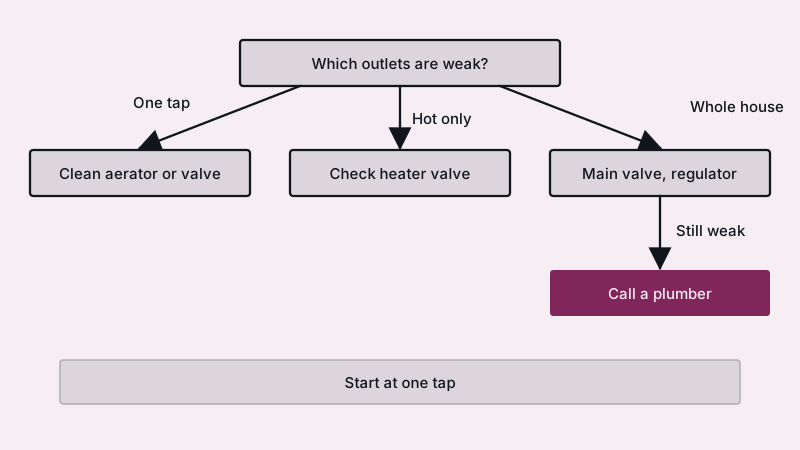
Before touching a valve, decide how widespread the weakness is. One shower head clogged with scale is a five-minute fix. Every tap in the house sagging points toward the main valve, a failing regulator, corroded supply pipe or a hidden leak. A hot-only problem points at the heater. The wider topic of low water pressure and valves has its own section, and this page is the diagnostic key to it.
Is it one tap, hot water only, or the whole house?
A single weak tap suggests a clogged aerator or cartridge, a half-closed stop under the cabinet, or scale in the shower head. Weakness only on hot: think sediment, or a valve left partly shut beside the water heater. Weakness at every outlet: the cause is upstream, in the main valve, regulator, corroded supply lines, a leak or the street supply.
A sorting table saves guessing:
| Symptom | First suspect | Quick check |
|---|---|---|
| One faucet weak | Aerator or cartridge | Unscrew the aerator and rinse it |
| One shower weak | Scale in the head | Soak the head, test with it off |
| Hot weak, cold fine | Water heater side | Check the heater shutoff is fully open |
| Both weak at all taps | Main valve, regulator, pipes | Confirm the main is fully open |
| Sudden drop everywhere | Leak or district work | Meter test, then call the supplier |
Detail on single fixtures is in the pages on low shower pressure, kitchen faucet pressure and weak hot water pressure.
What causes low pressure in a whole house?
When the whole house sags, think of five suspects: a main valve open only part way, a pressure regulator passing too little, scale or corrosion narrowing older supply pipes, a leak ahead of the fixtures, or weak supply from the street. The first two are quick to check, and sometimes cheap to put right.
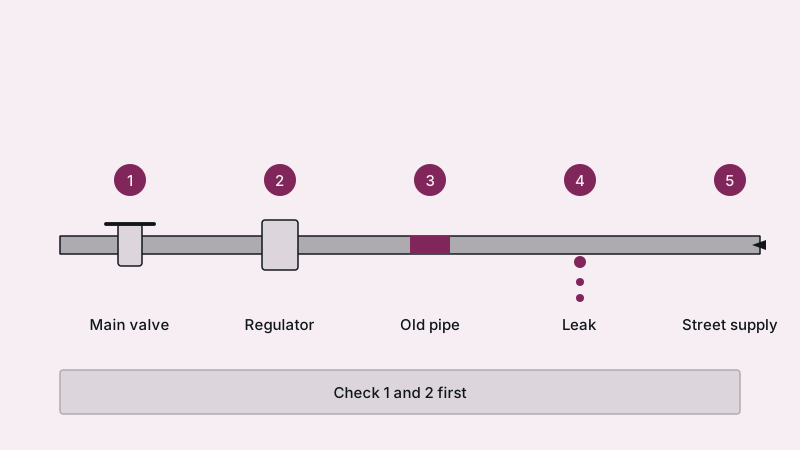
What each suspect looks like:
- The main valve. Found at the point where the service line enters. A gate valve that never got fully reopened, maybe after an old repair, throttles flow.
- The regulator. On many homes a bell-shaped valve sits close to the main. Its spring and diaphragm wear out, and it can fail high, with thumping and leaks, or fail low and starve the house.
- The pipes. Galvanized steel narrows from the inside over decades. A copper line can also scale up. The cure for badly choked lines is replacement, covered in galvanized pipe replacement.
- A leak. Water lost upstream of the taps is water that cannot push at them. EPA's two-hour meter check settles it quickly.
- The supply. Work on the street main or a change by the district may reduce pressure for a while. Ask the supplier before blaming the house.
Why did the pressure drop suddenly?
When pressure collapses across the whole house overnight, think leak, or think valve: something closed, moved or failed. Maybe a main valve was left half shut after plumbing work, a regulator gave out, or a line cracked. Read the meter with all fixtures off; movement means a leak. If crews are working on the street, ask the supplier.
Some clear ways to separate the causes:
- Check whether neighbors also lost pressure. If so, the issue is likely upstream of your meter.
- Test the meter for movement, as above.
- Look at the water heater area and under sinks for dampness.
- Note whether the change came with a sound, such as a hiss or thump.
The page on sudden pressure loss goes further into this pattern.
Can high pressure be a problem too?
It can, and on hillside tracts it is worth checking. Static pressure over 80 psi means the state plumbing code wants a regulator in place, because hard pressure wears out pipes, fixtures and the heater. A regulator stuck open lets it through, while a worn one can also starve flow, so use a gauge before assuming either.
A hose-bib gauge, sold at hardware stores, shows static pressure. Published guides say plumbers often dial regulators to between 50 and 70 psi, leaving margin under that ceiling. You can read how to inspect and adjust one in the pressure regulator adjustment guide, and find the valve with where a regulator is located. A worn one is replaced rather than adjusted; see regulator replacement.
Why is low water pressure dangerous?
Weak flow seldom hurts anyone directly, yet it may signal a leak, and hidden leaks bring water damage, mold and bigger bills. In unusual conditions a sharp pressure drop lets water move backward through a system, the reason backflow devices exist. It can also leave a tankless heater or sprinkler zone underperforming.
Read it as a warning. Pressure that fades over weeks earns a meter check even when the bill looks normal, because ignored pinholes become wet slabs. The repair side lives under leaks and burst pipes.
When is a professional visit the sensible next step?
Book a visit once an aerator or a fully open valve has not solved it, or the meter creeps with everything closed, or the regulator or main valve will not move, or the pipe is aging galvanized, or the gauge reads too high. Work on the main, and on gas appliances, is not a casual DIY job.
Check any contractor on CSLB's license lookup; California's license rule covers jobs of $1,000 or more. The quote form takes your symptoms, and the written price arrives before any work starts.
Common questions
How long are pressure repairs?
An aerator rinse or a valve opened fully takes minutes. A regulator swap is frequently a brief visit when the valve is reachable. Chasing a leak or replacing corroded pipe stretches from hours to days, and the plumber can estimate better after testing pressure and flow.
Which questions get useful answers from the plumber?
Find out what reading was taken and where, whether the regulator was tested, and how a leak was ruled out. Get the license number and a price on paper first. A plain explanation of the cause is a good sign.
Is anyone needed at home for the test?
Someone adult should let the plumber in and point out the shutoff and water heater. The tests are quick. A regulator in the garage or an exterior wall is worth pointing out in advance, along with anything you have already tried, such as cleaning aerators or opening valves, so the plumber does not repeat it.
Can I raise the pressure myself?
You can open the main valve all the way, clean aerators and, with some skill, turn a regulator's adjusting screw. Fitting a booster pump or a new regulator belongs to a plumber and may need a permit. Do not push beyond the code's 80 psi limit.
Is low pressure at the shower normal in older homes?
Not normal, but common. Scale in shower heads and old galvanized lines are frequent causes in houses of that age. Try soaking the head first. If hot and cold both feel weak throughout the house, the plumber should test pressure and flow at an outdoor tap.
The rest of our guides start from plumber in Mission Viejo.
Sources
Updated