About 87,000 people live in Lake Forest, in roughly 31,620 homes and apartments, and those homes do not share one plumbing story. Part of our south county coverage, this page sorts out the differences by era, slope and utility. Know what you need already? Tell us the problem through the quote request and the written quote follows the visit. Our home page shows the full list of services.
Which water district sends your bill?
It depends on the street. El Toro Water District serves only portions of Lake Forest, so neighbors a block apart can pay different utilities. That matters because the district is who you call about the meter, the street-side shutoff and pressure problems on its side of the line. Not sure which one is yours? Check your latest water bill, or confirm with your water district.
The utility owns everything up to the meter. Everything after it, including the pressure regulator in many homes, belongs to the homeowner. For a pressure complaint, the visiting plumber starts by working out which side of the meter the trouble sits on, because a district can fix one and a plumber the other. El Toro Water District also supplies recycled water and runs rebate programs for homes and landscapes, so read its site before paying for irrigation work.
How old are the homes, and which pipes are inside?
Lake Forest was built in layers, so pipes differ by neighborhood. Late-1960s and 1970s homes are the likeliest to have original copper and older drain pipe. Houses built from the early 1980s to the mid-1990s may hide polybutylene, the gray plastic supply tubing. Foothill tracts annexed in 2000 are generally newer, often with PEX or newer copper. A plumber confirms on site by reading pipe markings.
Here is the history behind that. Occidental Petroleum built a residential community in the late 1960s in and around eucalyptus groves planted in the early 1900s, and residents incorporated the city in 1991. In 2000 voters annexed the master-planned communities of Foothill Ranch and Portola Hills on the northeast edge. Water heater closets from the first era were never sized for modern units, which is why a replacement sometimes needs a vent or access change.
Two guides go deeper: polybutylene pipe replacement and PEX versus copper.
Do the mature trees and foothills change anything underground?
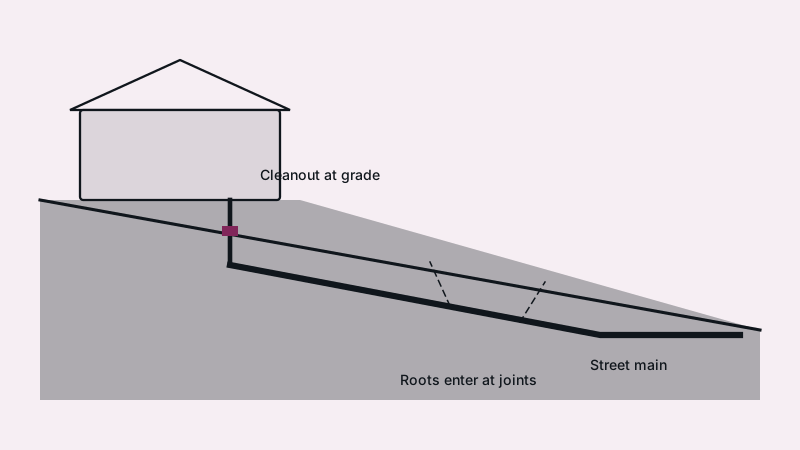
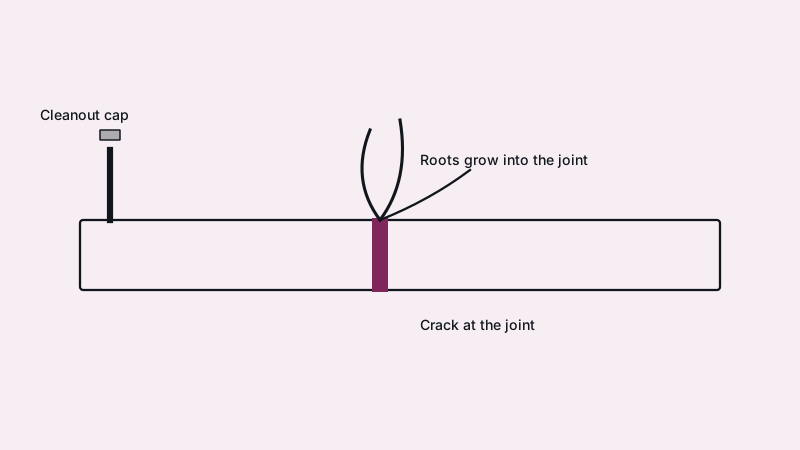
Possibly, in two ways, though neither is a rule. Tree roots seek moisture, and that is the usual reason older clay or cast-iron drains clog again and again on streets with tall, established trees. A camera inspection before replacing a line shows whether roots caused the problem or just found an older break. Slope matters too: the northeast end of the city climbs into the Santa Ana Mountain foothills.
The city center sits in the Saddleback Valley at about 486 feet. Mains on lower ground often deliver stronger pressure than houses up the slope, and strong pressure wears out faucets, toilet valves and water heater connections early. A pressure gauge from a hardware store, threaded onto an outdoor spigot, gives you the reading. Next steps are on the pages about turning a pressure regulator valve and about weak flow at the tap.
Does a seven-figure home value change plumbing prices?
Prices follow access, pipe age, permits and parts, not the value of the house. The Census Bureau's American Community Survey puts the median owner-occupied Lake Forest home at about $1,087,500, which mostly tells you what a slow leak behind a wall can damage. One California guide lists a service call fee of $75 to $150 before repairs.
Line items sit on the service call cost page, and the priciest routine job gets a full write-up under what a replacement water heater costs. Each figure is only a published guide; rely on the written quote.
Which permits does Lake Forest require?
Permits run through the city. The eLakeForest online portal handles permit applications and building inspection requests, and city hall sits at 100 Civic Center Drive. Replacing a water heater is generally a permit job in California cities. Fees and inspection steps are set by the city, so phone the Building Division before assuming a swap is exempt.
The water heater permit guide lists what an inspector checks: strapping, venting and the relief valve. Gas piping and main-line jobs are normally left to a contractor, and owner exceptions are narrow, so a weekend attempt is a poor idea. To check a contractor yourself, use the license search at cslb.ca.gov.
After you send the request, what comes next?
Start with the quote request: what broke, which street, and if water keeps flowing. A local plumber visits, looks things over, and sets the price down on paper first. Weekday phone hours run 9am to 5pm. Water spraying? Close the main shutoff first.
Smelling gas? Get out first. The SoCalGas line, 1-800-427-2200, is for use from outside the building; 911 covers real danger.
Common questions
What should a Lake Forest plumbing visit cost?
One California guide shows a service call fee of $75 to $150, with labor and parts added for the repair itself. Water heater swaps and repipes reach into the thousands. Those are guide ranges, not quotes. Only the plumber who looks at your home can price it, and a permit, when needed, belongs on that quote as its own line.
Does the city regulate small plumbing jobs?
Yes. The Building Division issues building and plumbing permits through eLakeForest, and swapping a water heater normally triggers one. Repiping and gas work call for a contractor, and California requires a contractor license on work of $1,000 or more. If your job is small and you cannot tell whether it is exempt, phone the city before the work, not after.
Which water district serves my Lake Forest home?
El Toro Water District covers portions of the city, and other suppliers cover the remainder. Your bill names yours. If the bill is missing, confirm with your water district or the city before phoning anyone about the meter or the water main. A plumber's work ends at the meter.
Do Lake Forest homes still have polybutylene pipe?
Some may. Polybutylene went into many American homes during a span that overlaps the 1980s and early 1990s, and it can sit behind walls untouched for decades. Markings on exposed pipe near the heater or main give it away. If it turns up, collecting a repipe quote now beats letting a burst decide the timing.
Sources
Updated