Whole-house repipes lean toward PEX for lower price, quicker work and easier routing; copper holds its lead on track record, sunlight resistance and stiffness. Neither is wrong. The right pick for your home depends on the walls, the water and the budget. It is one decision inside a bigger one, covered in the repiping hub.
Which is better for a repipe, PEX or copper?
Choose PEX when the walls are closed, the budget matters and the job should be quick. Choose copper when pipes will be exposed, when you want a rigid, sun-proof line, or when a buyer, insurer or landlord expects metal. Plumbing codes recognize both in general, but the city's Building Services Division decides what it inspects, so confirm before you commit.
A plumber we arrange can tell you which fits your floor plan. The wording to listen for is not "this is the best pipe" but "this is the better pipe for this house, because...". Ask for that reasoning in the written quote, from the price request step onward.
Is PEX cheaper than copper?
PEX costs less in materials and usually less in labor. The general reference on cross-linked polyethylene puts its material cost at roughly a quarter of alternatives, with no soldering or gluing needed. That does not mean the job costs a quarter: permits, wall repair and the fixtures count too.
We will not quote dollar figures here, because a repipe price swings with house size, the number of bathrooms, access through slab or attic, and drywall patching afterward. The sections on repipe cost and PEX repipe cost explain the drivers so that quotes can be compared fairly.
Does flow differ between half-inch PEX and half-inch copper?
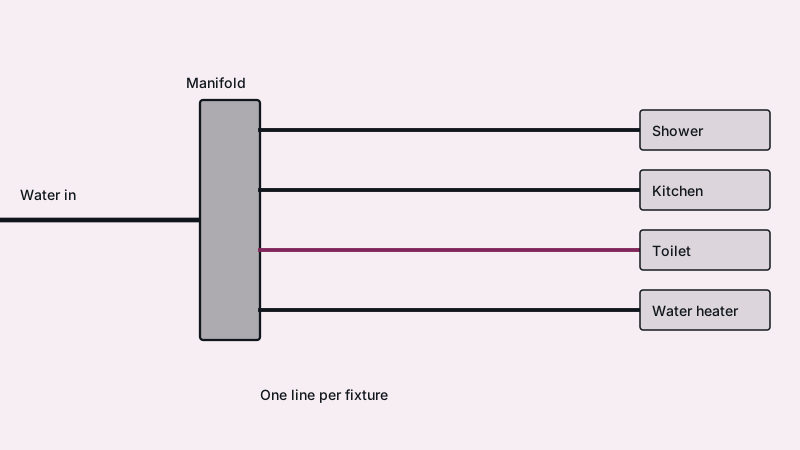
Nominal size is not inside size. A half-inch PEX tube has a slightly narrower bore than a half-inch copper tube, so at the same pressure copper moves a bit more water through a single run. Plumbers make up for it by upsizing a run or using a manifold with home-run lines, which gives every fixture its own supply.
In practice, a well-planned PEX layout delivers fine pressure to showers and kitchens. A poorly planned one, with long half-inch runs feeding several fixtures at once, produces a weak shower when the dishwasher starts. Ask the plumber how the lines will be sized, not only what they are made from.
How long will each material last in the wall?
Copper has the longer field record, over decades inside walls. PEX is younger but proven. Both can outlast a typical mortgage when installed correctly and fed with water they tolerate. Warranty terms differ by maker, so request the paperwork for the actual product and file it with the deed and permits.
What cuts short either material is rarely age alone. Copper can develop pinhole leaks where water chemistry is aggressive or flow is fast (see copper pipe pinhole leaks). PEX suffers from sunlight, from fittings made of high-zinc yellow brass that can corrode, and from poor crimps. The reference on PEX notes problems with such brass fittings, so ask which fittings the quote specifies.
Is PEX or copper better in cold weather and in sunlight?
PEX handles a freeze better, because it can expand and is less likely to split than copper or rigid plastic. Hard freezes are uncommon around Mission Viejo, which makes this a minor point locally. Sunlight is a bigger deal: PEX should not live outdoors in direct sun, and the general guidance is that a month of exposure may cause trouble.
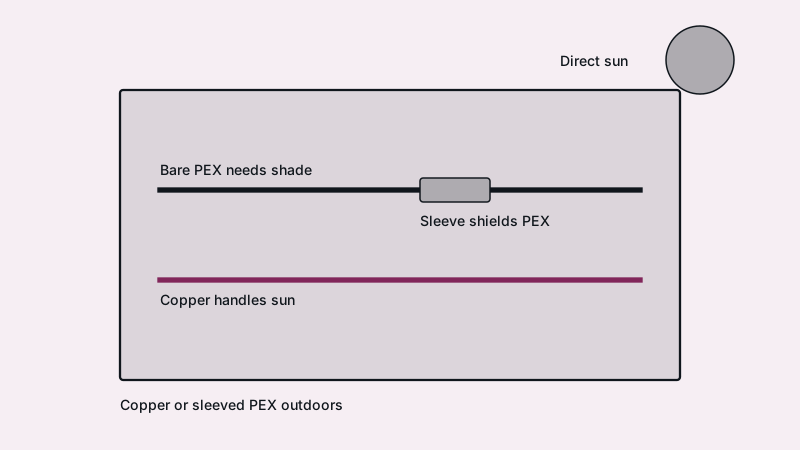
Copper shrugs off sunlight, so exposed runs, meter connections and spots near a garage door often get copper or a sleeve even in an otherwise PEX house.
Where do PVC and CPVC fit in?
PVC and CPVC are other plastics, not rivals in the same sense. PVC is a common drain and cold-line material but not rated for hot water. CPVC can carry hot water, yet it turns brittle with age and does not flex, which is why many repipes in older homes skip it. For supply lines in a full replacement, the realistic shortlist is PEX or copper.
If your house has polybutylene, a grey plastic piping used in many tract homes built in the 1980s into the 1990s, the question is not a choice between plastics, it is what replaces it. Older material gets its own pages: polybutylene and galvanized steel.
What suits Mission Viejo homes built from the 1970s to the 1990s?
Planned-community homes of that era often have copper that has aged, or polybutylene that has been a source of leaks. A repipe is common once leaks begin to repeat. Slab and two-story layouts shape the choice too: a two-story house with accessible attic runs suits PEX, while a slab foundation with lines underground needs a plan for access.
Water pressure matters just as much. Hillside neighborhoods in south Orange County can run high pressure, and a regulator helps whatever pipe you choose; read up on pressure regulator pricing and on rebuilding the plumbing of an older house.
Repiping usually needs a permit, but ring Building Services (949-470-3054) for the answer at your address. Before signing, recall that any job from $1,000 upward needs a California contractor license, that deposits stop at one tenth of the price (and never above $1,000), and that the state board's website lets you look a number up.
Common questions
Is PEX good for a whole-house repipe?
Yes, it is widely used for exactly that. Flexible tubing means fewer joints inside walls, and a manifold gives each fixture its own line. Quality of the fittings and crimps matters most, and so does keeping PEX out of the sun. A plumber can show you the layout before work begins.
Can both materials share one house?
Yes, using transition fittings made for the purpose, and it is common where a PEX house keeps copper at the heater or meter. Dissimilar metals need care at connections, and the city's handout on water heaters calls for dielectric fittings where unlike metals meet. A plumber should specify them on the quote.
Does one material taste or smell different?
Some people notice a faint plastic taste from new PEX that fades after flushing. Copper rarely affects taste. If the smell or taste persists after a thorough flush, test and ask your water district rather than assuming the pipe is at fault.
How disruptive is a repipe?
A typical house takes days, not weeks, once plan and permit exist, with taps dry for part of the working day. Bigger or slab-foundation homes take longer. Get a written schedule that includes drywall patching and the hours water stays shut off.
What belongs in the written quote?
Expect the contractor license number, the pipe and fitting brands, who obtains the permit, how walls get patched, the daily schedule, and a plan for concealed damage found mid-job. Anything left out of the paper quote is easy to dispute later. A price request is where we start.
Every service and price guide is on Capistrano Plumbing plumber.
Sources
Updated