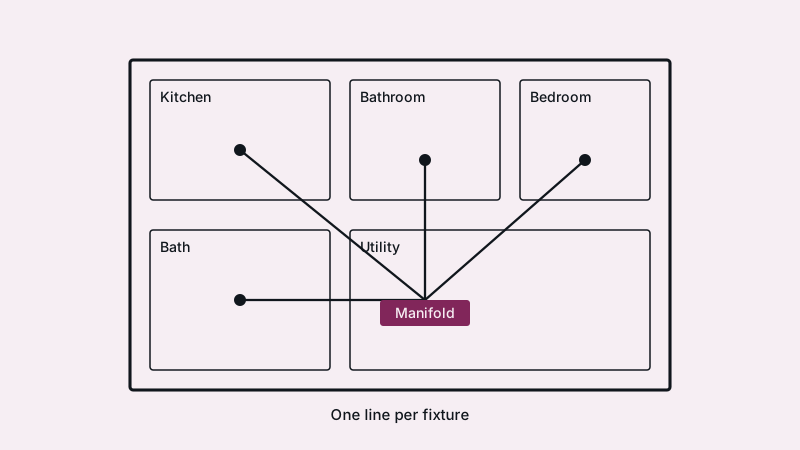
Repiping means swapping the old hot and cold supply pipes for new ones, usually PEX plastic or copper, while leaving drains alone. Crews open small access holes rather than whole walls, run the new lines, test them under pressure, then patch the drywall. A typical house takes a few days. The overview lives on the repipe page; this page follows the work in order so nothing on the day comes as a surprise.
What gets decided at the walk-through?
The plumber tours the rooms, tallies fixtures, locates the shutoff and the heater, and identifies the pipe material. Many Mission Viejo homes date from the 1960s through the 1990s, so the walk-through looks for polybutylene (gray plastic), copper with green stains, or galvanized steel. You come away with a quote in writing that names the materials and the drywall work.
Questions worth asking at this stage:
- Will walls be patched and painted, or only patched?
- Is the permit and inspection in the price?
- For how many days is the water off?
- Is the pressure regulator being replaced at the same time?
Run the contractor's number through CSLB too. CSLB sets its license requirement at $1,000 of work, and as for deposits, the ceiling is one-tenth of the contract or a thousand dollars, whichever is smaller. A repipe sits far past that line, so match the license number to the name on the contract.
How is a house repiped with PEX?
PEX is flexible cross-linked polyethylene tubing that bends around corners, so it can be pulled through walls and attics with fewer joints than rigid pipe. The plumber mounts a manifold near the heater, runs a home-run line to each fixture, crimps or expands the fittings, and tests the system before closing walls.
Because the tubing snakes, most access holes are small and sit behind fixtures, in closets, in the garage and in the attic. PEX does not corrode the way old copper can, and it tolerates a little freezing, which rarely matters in south Orange County. It should not sit in direct sunlight, so exposed runs get covered. Several fittings types exist, which is one reason to ask which system a quote uses. For cost and trade-offs, PEX versus copper goes through them.
How is a house repiped with copper?
Copper repiping uses rigid tubing cut to length and joined with soldered or press fittings. It needs more joints and more openings in drywall than PEX, since the pipe cannot bend through tight spots. It also takes longer and costs more.
Copper is tough and handles heat well, which is why some owners choose it for exposed runs or by preference. Its weakness is pitting. Tubing in hard water can develop pinholes, where chemistry and the pipe wall both play a part. Moulton Niguel Water District's latest report shows hardness between about 9 and 18 grains per gallon by source, so some owners factor that into the material choice. Read about the failure mode in copper pinhole leaks.
What changes when the home is built on a concrete slab?
On a slab, the old lines sit under the concrete, so the plumber leaves them in place, unused, and routes new lines across the attic, then down the wall cavities to every fixture. Nobody has to break the floor. The buried pipes get capped, and the new set is pressure-tested before drywall goes back up.
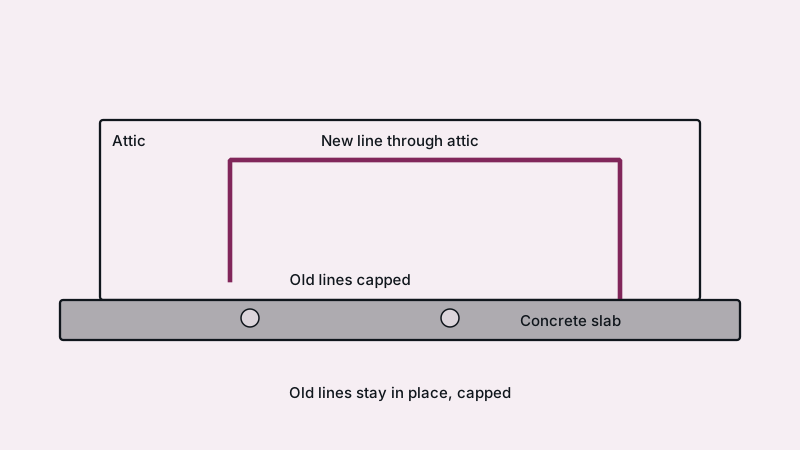
That reroute is why a slab repipe can cost more in wall repair than a crawlspace job. It also explains why a slab leak sometimes leads to a full repipe: once the underground pipe is abandoned, the whole house can go overhead at the same time. The decision between fixing one leak and replacing the lines is covered in slab leak repair versus repipe. Houses with polybutylene or galvanized steel follow the same method, see polybutylene replacement and galvanized pipe replacement.
What does a repipe day by day look like?
Count on the water being shut for much of one working day, while other parts of the job continue around it. Day one is rough-in: access holes and new lines. A pressure test follows, then the inspection, then connection to fixtures, then drywall patching. Painting is separate unless the quote says otherwise.
Typical order of work:
- Protect floors, shut the main, drain the old lines.
- Cut access openings and run new pipe to each fixture.
- Pressure-test the new system.
- Building inspection, as required by the city.
- Reconnect fixtures and heater, restore water.
- Patch drywall; paint if the quote includes it.
Plumbing permits are normally part of a repipe. Mission Viejo's Building Services Division handles them, and you can check requirements with them directly before work starts. Settle early who files the permit paperwork and who books the inspector. You will also want somewhere to store food and water during the shutoff, and a plan for showers that day.
How much should a whole-house repipe run, and why the spread?
We do not print dollar figures for a full repipe because we found no reliable published source, and the written quote sets the price. PEX generally costs less than copper, because it needs fewer joints and less wall opening. Size, bathrooms, floors and wall repair set the number.
These are guides, not quotes. What pushes a price up: two stories, many bathrooms, slab construction, plaster instead of drywall, tile that must be opened, and a repaint. What brings it down: attic and crawlspace access, fewer fixtures, and simple wall repair. Ask for the whole price, written, with the wall work itemized. For deeper numbers see the repipe price page, PEX repipe pricing and costs in an older home. Not sure the job is warranted yet? The signs that point to a repipe are listed there.
Could a handy owner do the job alone?
Parts of it are physically possible, yet a whole-house repipe seldom suits a do-it-yourself plan. It requires a permit and inspection, correct sizing, pressure testing and careful work inside walls, and a mistake can flood a home. Most owners hire a contractor and keep the saved effort for decisions such as material and wall finish.
If you do want to price the work, use the price request page, and a local plumber visits, looks and quotes in writing. The Capistrano Plumbing home page explains how that visit gets set up.
Common questions
When will the taps work normally again?
Many repipes finish in a few working days for an average house, though bigger homes and slab reroutes can take longer. Water is typically off for part of one day. Wall patching and painting add time because plaster or paint must dry. Your written quote should list the expected days, so ask for that detail up front.
Will my family have to leave the house?
Usually not. Water is shut for stretches, dust is contained to the work areas, and fixtures come back on at the end of the day. Some owners stay at a relative's home for one night when the schedule is tight or when small children or elderly family are in the house. Ask how the plumber handles water at night.
Is PEX allowed for repiping in California?
Yes, PEX is used for residential supply lines in California, and the work is done under a plumbing permit and inspection. The city's Building Services Division can confirm the requirements for your address. Ask which fitting system the plumber uses, and whether the manifold, valves and pressure regulator are included in the price.
Will a repipe fix low water pressure?
Often, if the old lines are clogged with scale or corroded. It will not help if the cause is the district supply or a failing regulator, so ask the plumber to measure pressure first. New pipe with the right size can also restore flow at far fixtures, which is why the quote should state pipe size.
Does a repipe affect my homeowner insurance?
It can matter. Some insurers ask about pipe material in older homes, and pipes at risk can influence coverage or premiums. Tell your insurer once the work is complete and keep the permit and final inspection records. Whether anything changes depends on your policy, so ask your agent rather than assume.
Sources
- CSLB, Learn about home improvement contracts
- City of Mission Viejo, Building Services Division (permit handouts and fee schedule)
Updated