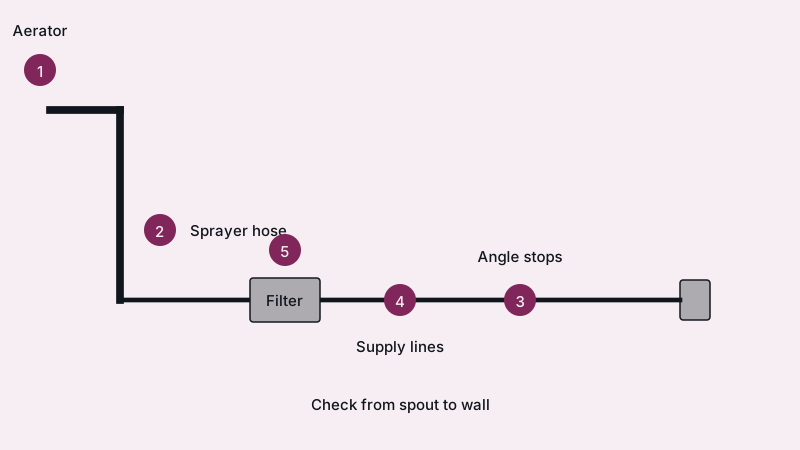
When the kitchen tap is weak and the bathroom runs normally, the restriction sits between the sink and the wall. Four suspects cover most cases: the aerator screen, a kinked or clogged pull-down hose, a filter under the sink, or a stop valve that never got turned all the way on. Kitchen sink plumbing, disposals included, is handled under garbage disposal repair, and the quote request books a local plumber for anything below.
Is the problem only at the kitchen faucet?
Test two other taps. If the bathroom sink and the outdoor spigot flow well, the kitchen faucet or its lines are at fault. If every tap is weak, look upstream; the house-wide version of this problem is on low water pressure service.
Next, check hot against cold at the kitchen faucet. Weakness on a single side blames that side's supply line, stop valve or faucet inlet. Weak on both sides with a spray that looks fine at the other taps points to the spout end: aerator, hose or diverter. A shower with the same complaint is covered in low shower pressure.
Could the aerator be clogged?
Yes, and it is the cheapest fix. That small screened cap on the end of the spout catches grit and flakes of scale. Hard water in south Orange County leaves scale there, so a screen can be half blocked and still look clean. Unscrew it, rinse the parts, soak in white vinegar and refit.
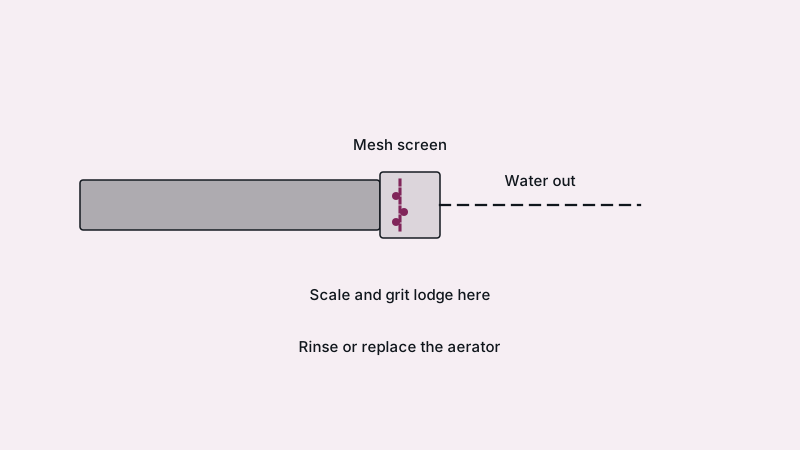
Take the faucet to the store if you need a replacement, since sizes differ. EPA treats 2.2 gallons a minute as the standard flow for bathroom sink faucets and 1.5 as the WaterSense cap, so even a flow-limited aerator should not feel like a trickle. If the faucet runs strongly with the aerator off and weakly with it on, you have found the cause. A fresh aerator costs a few dollars.
What if the pull-down or pull-out sprayer hose is the cause?
A kinked hose, a clogged weight or a failing check valve under the sink can choke the flow, and the sprayer diverter can leak water to the side spray. The symptom is strong flow when the sprayer head is removed and weak flow with it fitted.
Look under the sink at the hose, which hangs in a loop with a weight on it. A twist or tight bend restricts it. Disconnect the hose from the faucet inlet carefully and flush it into a bucket. If the flow stays weak, the hose or the faucet body needs replacing. When the faucet is older than about ten years, replacement may cost little more than parts; compare in faucet replacement cost.
Are the supply lines or angle stops partly closed?
Sometimes. Flexible supply lines can kink during installation, and angle stops, the small valves under the sink, may be only partly open after a repair. Turn each one fully open and see if the flow changes. Corroded old stops sometimes refuse to open fully, and those get replaced.
Feel along the lines for a bulge or a flat spot. A braided hose that has crushed at a bend restricts like a pinched garden hose. A new supply line costs little, and changing the pair together is sensible. If a stop valve leaks or will not turn, a plumber should replace it, since forcing a stuck valve can crack it and flood the cabinet.
Is a filter or reverse osmosis system under the sink holding the water back?
It can. Filters clog and reduce flow gradually, and a reverse osmosis system has its own small tap that is naturally slower. If the main faucet runs through a filter, bypass it or swap the cartridge. A sudden drop after a filter change often means the new cartridge was not seated or air is trapped.
Let the water run for about a minute so trapped air escapes. Replacement schedules are on the cartridge label, usually every six to twelve months. A softener or filter on the main line can also change flow, so note any equipment recently installed. If the drop began right after a plumbing job, mention it to the plumber, since that timing often explains the cause.
How much does a plumber bill to cure a weak kitchen tap?
Cleaning an aerator costs nothing, and a new faucet cartridge or supply line is a small parts cost. A plumber visit adds a diagnosis fee and labor, with a new faucet installed for more. You get the actual price in the written quote.
One California guide lists $95 to $175 an hour for Los Angeles and Orange counties, so ask for the rate in writing. Water in the cabinet too? Start with fixing a leaking pipe under the sink. If pressure fell everywhere at once, read the water meter before paying for repairs, since EPA estimates an average home loses over 9,300 gallons a year to leaks.
Common questions
Why is the kitchen faucet weak but the bathroom faucet strong?
Because the restriction is local. The kitchen faucet has more parts that clog: a sprayer hose, a diverter and often a filter. The bathroom faucet has fewer. Start with the aerator, then the hose and the angle stops. If none helps, the faucet cartridge or body is the next suspect.
Does one weak tap hint at something larger?
Seldom. A lone weak faucet nearly always has a local cause. Should the weakness spread to other taps, or the meter keep moving with everything off, a regulator or hidden leak becomes more likely. See sudden low pressure for whole-house causes.
Is it time for a new faucet altogether?
If it is old, corroded inside or keeps needing repairs, probably. Clogged internal passages are hard to clear, and a new unit arrives with a clean aerator and hose. On a newer faucet, cleaning and swapping a part costs less.
Is it safe to remove the aerator permanently?
You can, but the stream will splash and some features, such as the spray pattern, stop working. The aerator also adds air that makes the stream feel fuller. Clean it instead. If you want more flow, ask a plumber about a different aerator or faucet.
This guide is one of many on Mission Viejo plumber.
Sources
Updated