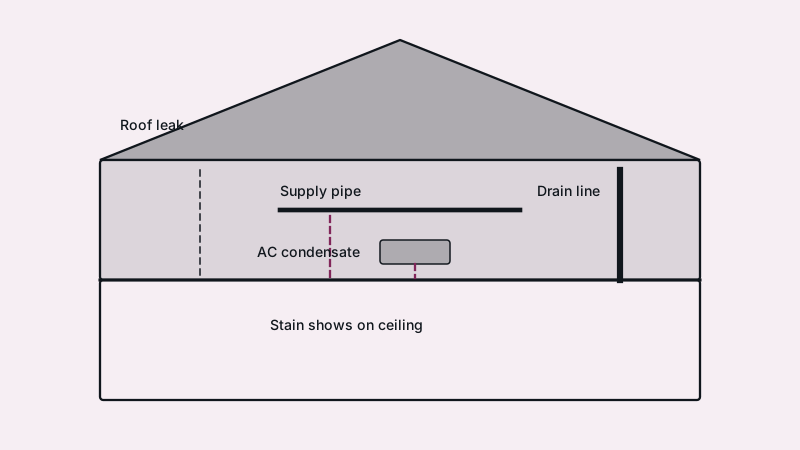
Water through a ceiling has one of four origins: a pressurized supply pipe, a drain line, the roof, or an air conditioner's condensate. Each leaves a different pattern, and the repair is different too. Shut off the water you can control, protect the room, and figure out the timing of the drip before anyone cuts into drywall. Ceiling leaks belong to the larger subject of leaks and burst pipes, and this page helps you narrow down the source.
What comes first when water starts dripping through the ceiling?
Suspect a pipe? Turn the house valve off. Then isolate the electrics in the wet zone, park a bucket where it drips and drag furniture aside. A sagging bulge can be pricked, but only after the power is down and with you standing clear of its fall line. Take pictures, and begin hunting for the source.
The worst case is water pouring out of a ceiling light. Do not flick that switch, and if the panel sits across a soaked floor, stay away from it as well; an electrician is the call, or 911 if someone could be hurt. Letting a bulge drain through a single pinprick at the bottom of the bulge beats waiting for the whole board to drop.
What clues show whether it is the roof, a pipe or the air conditioner?
Watch the clock. A leak that turns up only with rain is blaming the roof. One that arrives when somebody upstairs showers or flushes blames a drain. A leak that runs through the night as well as the day blames a supply pipe, and one that appears on hot afternoons blames the cooling system's condensate drain or pan.
A short field test:
- Rain test. Does it only show up during or after a storm? Roof or flashing.
- Use test. Have someone upstairs run the shower, then the basin tap, then flush, while you watch below and note which one brings water.
- Meter test. With every fixture closed, record the dial, wait two hours and look again. EPA suggests this for any hidden leak, and movement implicates a supply line.
- Appliance check. Look at the attic water heater, furnace or air handler and its drain pan.
A stain with no active drip may be old; the page on stains with no current leak explains how to tell. For visible clues in the paint and drywall, see signs of a water leak in a ceiling.
Can a small ceiling leak wait a few days?
A small one is less pressing than a spray, but it is not harmless. Slow moisture feeds mold and rots framing, and a small stain can be the visible edge of a bigger wet area. Dry the spot, trace the source within days and keep watching. A growing stain, a faster drip or soft board turns it urgent.
EPA guidance puts the drying deadline for wet materials at one to two days, to head off mold. The classic mistake is painting over a faint stain without fixing the cause: it returns while the board behind keeps soaking. Trace the stain edge in pencil, write the date, and check daily.
How is a leaking pipe above a ceiling properly fixed?
Permanent repair begins with a dead, empty line. Then the damaged stretch is cut away, or the joint dismantled, and new pipe and fittings of the right type go in. A split or pinholed length should be replaced rather than wrapped. Clamps and putty are stopgaps, and the lasting job over a ceiling is best handed to a plumber.

Method follows material. Copper is soldered or joined with push-fit fittings, PEX takes crimp or clamp rings, CPVC and PVC take their own solvent cements, and galvanized is threaded. The plumber also asks why it failed, since one pinhole in old copper often signals more to come; see copper pipe pinhole leaks and leaking water pipe repair.
What sealant works on leaking pipe joints?
Nothing smeared on the outside cures a joint leaking under pressure. PTFE tape or pipe dope goes on threads when a joint is remade, and solvent cement bonds plastic pipe during assembly. Epoxy putty or a clamp may hold a drained, dry pipe for a short while, yet the joint still needs redoing.
Using the wrong product makes things worse. Silicone caulk on a pressurized joint fails. Tape on a solvent-weld joint does nothing. Thread sealant must match the pipe: fuel gas fittings take products rated for gas, and gas piping is not a casual homeowner job.
What happens if a pipe bursts above the ceiling and the house floods?
Water supply first: the house valve. Then electricity to wet areas, then get out of rooms where the ceiling is sagging. Ring a plumber and the insurer, film the damage, and start fans and a dehumidifier once the flow has stopped. Standing water is a job for a wet-vac or pump, not a household vacuum.
How long a burst takes to fix depends on access. A split in an attic pipe with an open hatch can be repaired in a visit. A break in a wall or between floors needs opening drywall, and the drying and finishing take longer. The guide to confirming a burst shows how to be sure it is one.
Is the mold on a leak-stained ceiling dangerous?
Mold needs moisture and time, and spots can show within a couple of days on drywall that stays damp. Small patches on hard surfaces can often be cleaned, but growth in soaked drywall or insulation usually means removing the material. EPA's one-to-two-day drying target and a fixed source both matter.
Bring in a professional if the area is large, someone in the house is sensitive to mold, or growth appears after drying. Soft, porous materials, ceiling tiles being one, may end up in the trash. In homes built before about 1980, a textured ceiling may contain asbestos, so have it tested before scraping or sanding.
Whose job is it when you rent?
Put it in writing to the landlord or manager right away, with dates and photos attached. Landlords in California must keep rentals habitable under Civil Code 1941.1, working plumbing included, so an ongoing leak lands on them. Water coming down from the unit above is also the manager's to sort out, including access.
Save every message. Hiring your own plumber for the building's pipes needs the landlord's okay, except in a true emergency like spraying water, where you close what you safely can and call. Move belongings, photograph them for renters insurance, and if nobody responds, a local tenant resource or the city can advise.
A garage or basement ceiling below a bathroom gets the same treatment. Basements are uncommon in Orange County, so a garage ceiling is a likelier case, and drywall there often has no insulation to hide the stain.
Common questions
When will the ceiling be back to normal?
A reachable pipe can be repaired in one visit, with drying after. Hidden leaks take time to trace, and a new ceiling needs several more days to dry, patch, texture and paint. An estimate becomes possible once the source is known; ask who handles each stage.
Who do I call first, a plumber or a roofer?
Run the rain test. Drips that come only with storms mean a roofer first; drips that follow fixtures or never stop mean a plumber. Still guessing? A plumber can inspect supply and drain lines and tell you whether the roof deserves suspicion. Describe the symptoms on the quote form.
Is anyone required to be present?
Yes, a grown-up who can open the attic, the room upstairs and the ceiling area, and approve work, ideally someone who knows when the attic and upstairs rooms were last used. Clear the floor beneath the leak, and keep children and pets off wet floors and away from any opened ceiling.
What do I ask before agreeing to a repair?
Find out whether the source will be traced before anything is cut, how the pipe will be repaired, who patches the ceiling and what the written price is. The license number is worth checking at CSLB, since California wants one from $1,000 of work. A deposit can run no higher than 10 percent or $1,000.
Is it fine to paint over the stain?
Wait until the leak is repaired and the ceiling is bone dry, then seal with stain-blocking primer before painting. Board that is soft, cracked or sagging should be replaced, since paint on wet board peels within weeks. The Capistrano Plumbing home page covers the other jobs.
Sources
- EPA, A Brief Guide to Mold, Moisture and Your Home
- EPA WaterSense, Fix a Leak Week
- California Civil Code section 1941.1, tenant habitability
- Contractors State License Board
Updated