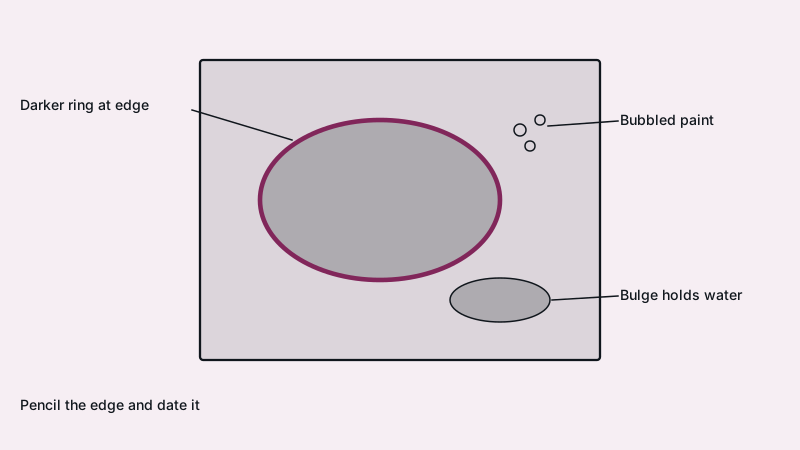
Look for brown or yellow rings, bubbling or peeling paint, a sag or bulge in the drywall, musty smell, drips or damp insulation. A stain that grows after nobody has used water upstairs, or after rain, tells you where to look next. Acting fast limits damage. Source-finding is the job of a leak plumber when the cause is not obvious.
How does a leaking ceiling announce itself?
The classic sign is a stain with a darker ring at its edge, often tan or brown, that spreads over days. Paint may bubble or peel, the drywall can sag, and a wet patch may feel soft. Water that has pooled behind the board sometimes drips from a light fixture, a vent or a seam.
Other clues: a musty or earthy smell, mold spots appearing near the stain, nail pops, a sound of drips in the cavity, and a ceiling that has started to feel warm or cold compared with the rest. Photograph the stain and trace its edge with a pencil and a date, so you can tell whether it is growing.
What should happen in the first few minutes?
People first, then belongings. Keep out from beneath any ceiling that sags and could drop. If it is swollen with water, set a bucket beneath and let a screwdriver tip open the lowest part of the bulge so the water comes out in one place, standing to the side. Switch off the breakers feeding lights and outlets beneath a soaked ceiling, because water and wiring do not mix.
Suspect a pipe? Close the house shutoff, usually where the supply pipe comes in. Traced it to one upstairs fixture? Close that fixture's own stop valve. Move furniture, lift rugs, and run a fan once the leak is stopped. Take photos for insurance before cleanup, and keep damaged material for the adjuster to see.
Is it a plumbing leak, the roof or the air conditioner?
Three common sources look alike from below. Timing helps. A stain that appears or spreads only around storms suggests the roof. A stain that grows on hot, muggy days points to the air conditioner's condensate drain or to sweating ducts. A stain that grows regardless of weather, or after showers and laundry upstairs, points to plumbing.
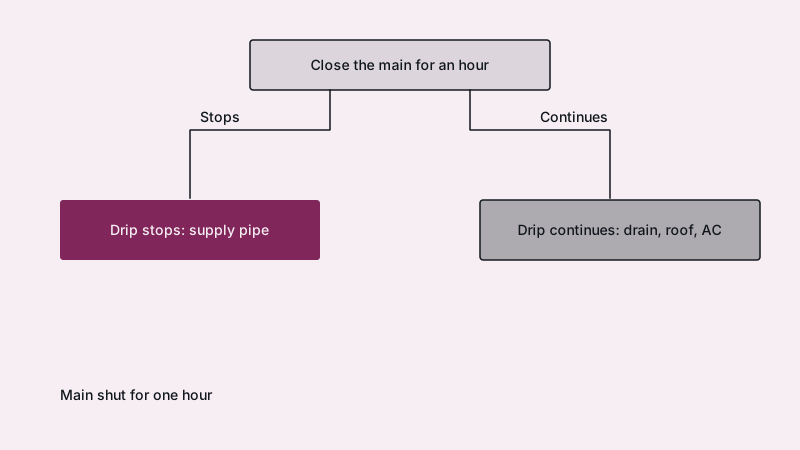
Try closing the main for an hour. Dripping that stops was pressurized supply plumbing; dripping that carries on suggests drain lines, the roof or the AC. A bathroom directly overhead is a frequent culprit, especially the toilet flange, tub drain or shower valve. Moisture meters and thermal cameras let a plumber trace the water's path.
What noises give away a burst pipe?
Hissing or rushing when every tap is closed, steady dripping inside a wall or ceiling, banging, and a sudden fall in pressure make up the soundtrack. A burst feels different from a slow leak: it produces visible water within minutes, spreads quickly and can bring down ceiling material. Shut off the main first, then call.
Outside the house, signs of a burst or broken line include a soggy or sunken patch of ground, water pooling with no rain or irrigation, a sound near the meter, and an unexplained jump in the meter reading. The meter test in the next section helps; the full list of clues is in how to know a pipe has burst.
Why is the water bill high when no leak shows?
Because many leaks hide: a toilet that runs, a slab leak, a pipe in a wall, an irrigation line. The EPA's household figures run like this: an average home leaks away over 9,300 gallons yearly, and about 9 percent lose 50 gallons or beyond each day. A four-person household using 12,000 gallons or more in a winter month may be leaking badly.
Let the meter decide. Close every tap and appliance, write down the reading, give it two hours of no use, then check again; a moved dial means a leak. Then close the house main and compare again. If the dial keeps turning, the leak is upstream of that valve; if it holds still, the leak is somewhere inside. More in high water bills explained.
Why do copper pipes get pinholes?
Copper pipes in many homes from the 1970s onward can develop tiny pits that eventually go through the wall. Water chemistry, high flow velocity, poor installation, and erosion at joints are the usual suspects, and different houses fail for different reasons. One pinhole is often followed by more, since the same conditions apply along the line.
A pinhole sprays a thin, forceful jet that stains drywall in a line. Short-term fixes such as clamps help while you arrange repair, but several leaks in the same house raise the question of a repipe. Related: copper pinhole leaks and how to repair one.
What should I know about ceilings in older Mission Viejo homes?
Many planned-community homes here date from the 1960s to 1990s, and textured or popcorn ceilings in older homes may contain asbestos. Do not scrape, sand or cut a damaged textured ceiling until a sample has been tested by an accredited laboratory. Disturbing it releases fibers, and rules for handling asbestos exist for good reason.
For the plumbing itself, a ceiling leak often comes from old supply lines or drain fittings in the floor above, and from water heaters in attic or upstairs closets. Aftermath and repair are the subject of ceiling damage from leaks and ceiling water leaks.
Common questions
Is this stain old or still active?
Feel it and watch it. Damp, soft or cool and growing means active; dry, hard and unchanged may be history. Outline the edge in pencil with the date. After a day or two without rain or water use, a stain that grows still has a source. A stain that never changes may only need paint.
Does homeowners insurance cover ceiling damage from a leak?
Frequently it pays for abrupt, accidental water damage, and frequently it leaves out gradual leaks and wear. Your policy and insurer have the final word. Photograph, stop the leak, dry out and keep records. Common gray areas are mapped in burst pipe insurance.
Can I cut a hole in the ceiling to look?
A small inspection hole in drywall can be fine, with the power off and eye protection on, but avoid it in a textured ceiling of unknown age and do not cut near wiring. A plumber or restoration company can open it neatly and check with a moisture meter first. A price request lets us arrange a visit.
How long can a ceiling leak go before it causes mold?
Wet materials can start growing mold in a day or two, so dry the area fast with fans and a dehumidifier. If material has been wet longer, or the smell is strong, get it inspected. Anything behind the drywall that is saturated may need removal.
This guide is one of many on Capistrano Plumbing.
Sources
Updated