Begin with the sink closest to the laundry area. Cold there as well? Then the heater is at fault, and the water heater repair guide takes over. Hot at the sink but not at the washer, and the places to look are the hose connections, the wall valves and the cycle you chose, ahead of the machine, since those account for most cases.
Is the hot hose actually connected to the hot valve?
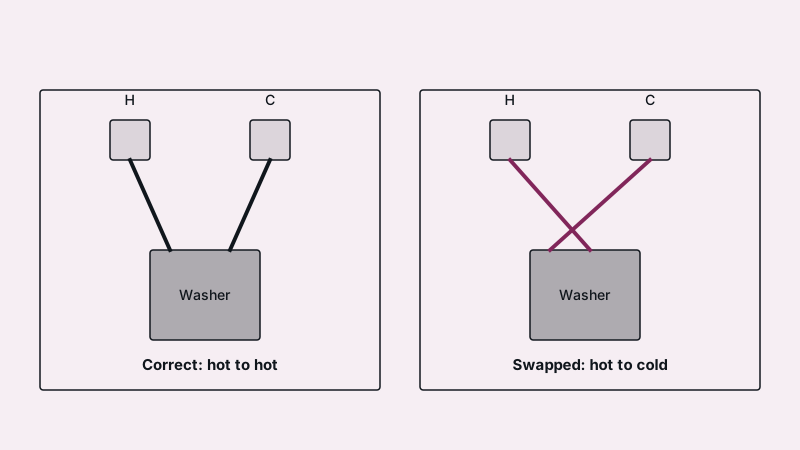
Often it is not, especially after a move or a machine swap. Pull the washer out enough to see the two wall valves. Hot usually sits on the left, and hoses or valves often carry a red tag for hot and a blue one for cold. A swapped pair means cold water on every cycle.
Also confirm both handles are fully open. A hot valve opened only partway, or one with a stripped stem, passes a trickle, and the machine may give up waiting for the fill. Twist the handle and listen. If the valve spins without the water responding, the valve itself needs replacing.
Before you pull the machine, shut both valves, because an old rubber hose can burst. Many people replace rubber hoses with braided stainless ones, and a check of the hoses every few years is wise. In EPA numbers, an average home leaks more than 9,300 gallons yearly, and a weeping washer hose is a classic hidden source.
Could a clogged inlet screen be blocking the hot water?
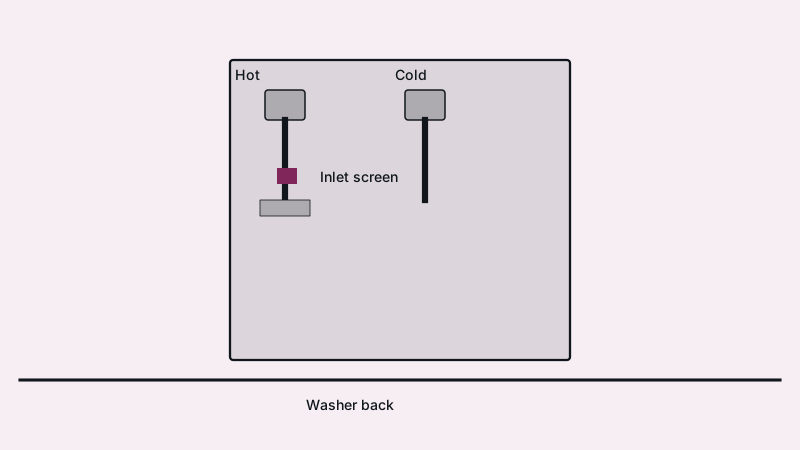
Yes. Each hose ends in a small mesh screen where it meets the machine. Mineral flakes from hard water, and sediment after a plumbing job, collect there. A blocked hot screen means little or no hot water gets in, so the washer fills mostly cold. Cleaning costs nothing and takes about ten minutes.
Close both wall valves, unscrew the hoses from the back of the machine and hold a bucket underneath. Tap out the screens, rinse them, and brush off scale with an old toothbrush. In Mission Viejo, where imported supply is hard, crusty buildup on screens and faucet aerators is common. Reconnect hand-tight with a further quarter turn from pliers, open the valves slowly, and look for drips.
Does my washer use hot water on the cycle I picked?
Many do not. Modern washers use less hot water by design, and cycles like normal, eco and quick wash may blend or skip hot entirely. A cycle labelled warm often mixes in only a small amount. Select the hot or sanitize setting, if the model has one, and watch the water temperature at the start.
Also check the temperature selector. A dial or button set to cold, or a stuck selector, gives cold water on a perfectly healthy machine. The manual's cycle chart lists which cycles use hot. A front-loader may also seem to fill slowly because of how it meters the first water, which can feel colder than expected.
When is the washer's own inlet valve at fault?
If the hoses and screens are clear and the hot tap at the wall runs hot, a failed hot solenoid valve inside the washer is likely. It is an electrically controlled gate that opens on command, and when it fails the hot side never opens. You will often hear cold water fill and no hot flow at all, and the washer may show an error code.
This is a part replacement, commonly handled by an appliance repair service, not a plumber. A plumber can confirm the plumbing side is delivering hot water to the valve, and the dividing line is simple: water reaches the machine's hose hot, the machine will not take it. Check the manual or maker's support page for your model's part and error code.
Why is the water not getting hot at the washer when other taps are hot?
Distance and demand can account for it. Many households set the water heater near 120 degrees Fahrenheit, and the water loses heat along a long pipe run. A laundry room at the other side of the house or in a garage addition may wait a while for hot. A washer filling in brief bursts may never see it.
Try this: run the hot tap closest to the washer for a minute and feel for heat. If it takes minutes to turn hot, the line is long, uninsulated or served by a heater with too little capacity. Wrapping the reachable pipe sections helps a little, and a recirculation line is plumber territory. Weak hot-side flow with normal cold is a further cause; see low hot water pressure.
And if no hot tap anywhere gives hot water?
Then the washer is innocent and the heater is the issue. Typical causes: a dead pilot on a gas tank, a popped breaker or burned-out element on an electric one, or a fault display on a tankless unit. The no hot water checklist sorts these by type, and a related split is untangled in no hot water but the heating works.
If gas odor appears near the heater, you walk out and report it to SoCalGas on 1-800-427-2200. The unit's own label may let you relight a pilot; beyond that, gas repairs sit with a contractor who has a state license. List the symptoms in a quote request and we line up the visit.
Common questions
Settings look right, so why is the fill still cold?
The likely causes, in order, are swapped or partly closed hoses and valves, a clogged hot inlet screen, then a failed hot inlet valve in the machine. A heater that is not delivering hot water to the laundry room is the other candidate. Test the hot tap near the washer to split the plumbing from the appliance.
Can a low heater setting explain it?
Yes. A thermostat turned down for savings or safety can leave water lukewarm before it gets to the washer, especially when it has to travel far. Raising a gas heater's dial or an electric thermostat a notch can help, but scalding risk climbs with the setting (Wikipedia notes skin can burn in under five seconds at 140 degrees), so do it carefully and test with a thermometer.
Is washing in cold water a problem?
No, many are made for cold, and detergents are formulated for it. Hot water helps with heavy soil, oils and sanitizing. Use whichever the garment label says. The issue is when you select hot and do not get it, since heavy soil and towels may not come out clean.
Does weak pressure affect the hot fill?
Yes. With weak hot-side pressure the fill sensor may time out, or the machine takes whatever arrives first. Causes include a clogged inlet screen, a half-shut valve, or trouble with the house pressure regulator, explained in adjusting a water pressure regulator.
Who should look at it, a plumber or an appliance repairer?
Start with the plumber if no hot water reaches the washer's hose, since the cause is the plumbing, valves or heater. Choose an appliance technician when hot water is flowing at the hose and the machine will not use it. Checking first at the hose end with a bucket tells you which one to call.
The rest of our guides start from Capistrano Plumbing plumber.
Sources
Updated