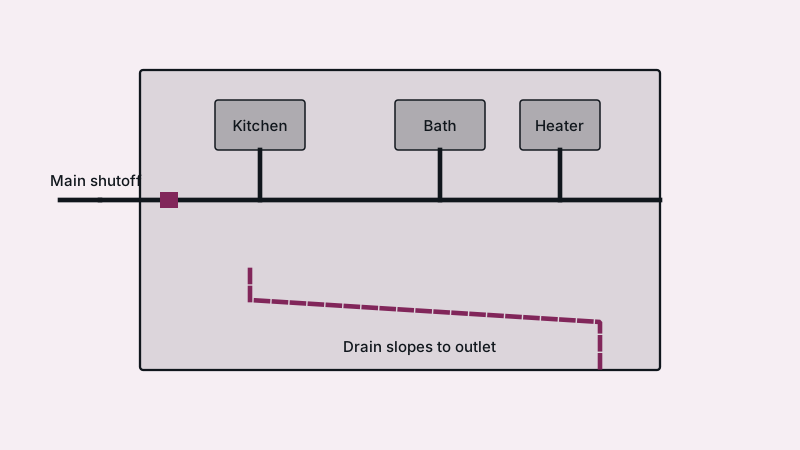
Plumbing under a manufactured home is a three-part job: a water supply that connects to a service point and runs up through the floor to fixtures, a drain system that slopes to a single outlet, and, where the home uses gas, a gas connection that only a contractor should make. The complete run lives in a low crawl space under the floor, so supports, protection and access matter more than they do in a house. If you want a plumber arranged for your Mission Viejo home, start from the home page or go straight to the request form.
This page describes the order of work so you can follow a contractor's plan or judge a quote. It does not replace the maker's installation instructions or the permit.
Which rules and permits apply to a mobile home plumbing job?
Plumbing in a manufactured home is subject to the home's own construction standard, plus local or state rules for the site. Which agency issues permits depends on where the home is: some sites fall under the state housing department and others under the city's building division. Ask the City of Mission Viejo Building Division which applies at your address before any work begins.
Gas work and water heater changes tend to need a permit, with an inspector from the city or the state. Manufactured homes call for a heater carrying a listing for that use, so a regular house model may be turned away; the building office or the maker can say. The permit steps are described in water heater permits.
Anyone hired for more than $1,000 of labor and materials needs a California contractor license. Check the number on the state board's website before agreeing to terms.
What pipe materials go under a manufactured home?
Flexible plastic is the usual choice: PEX or similar pipe for water, and ABS plastic for drains. Flexible supply pipe tolerates the movement of a floor system and is quick to run through tight spaces. Whichever material is used, it should be a type approved for the job and installed to the maker's and code's rules. Avoid mixing pipe types without proper fittings.
The gray flexible polybutylene sold through the 1980s and early 1990s is a prime candidate for replacement; see polybutylene replacement.
In what order is the new plumbing installed?
Roughly: set out the layout, run the main water supply to a shut-off valve, branch to each fixture with its own valve, install drain lines at a steady slope to the outlet, add vents, support everything, test, and then insulate and close the belly. Test water lines under pressure and check drains with water before anything is covered.
- Plan the layout. Mark where each fixture connects to the floor and where the main supply and the sewer outlet are.
- Install the main shut-off. Put a valve where you can reach it quickly, with the main supply entering the home. Everyone in the household should know where it is.
- Run the supply lines. Branch to the kitchen, baths, laundry and water heater, with a shut-off at each fixture. Keep lines supported at regular intervals so they do not sag.
- Run the drains. Drains must slope toward the outlet, and need vents to drain freely. A sag or a flat spot collects waste and eventually clogs.
- Connect fixtures through the floor. Seal penetrations so air and pests cannot enter.
- Test. Pressure-test the supply, and run water through each drain to look for leaks.
- Protect. Insulate pipe in exposed areas and secure the belly wrap or skirting.
What about gas under a mobile home?
Gas pipe belongs to a contractor working under a permit. Each change is leak-tested and inspected, and the home connects through an approved connector, which makes this a poor weekend project. If gas is ever smelled, everyone leaves, and the utility is called from outside on 1-800-427-2200.
Our page on gas line plumbing explains what the work involves. Find out who will test the system and book the inspection, and keep the paperwork afterwards.
How are supports, slope and protection handled?
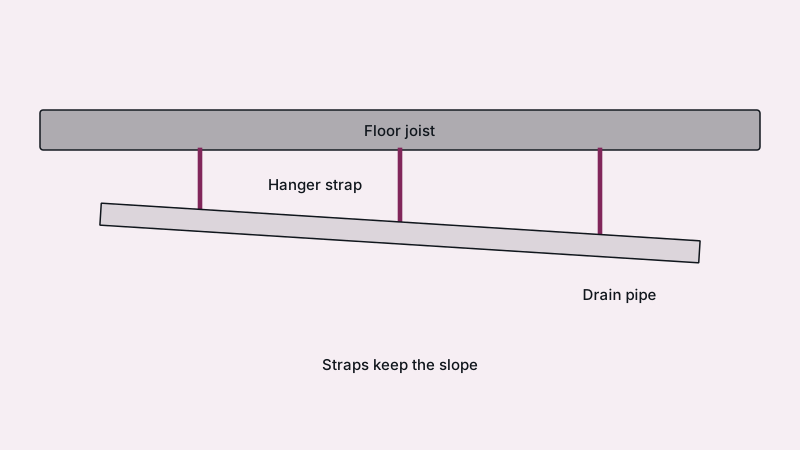
Under a house with a floor system, pipes are hung from the structure with straps or hangers at intervals the maker or code specifies, so lines do not sag or rub. Drains need a steady downhill run. Protection means insulating water lines, closing gaps in the belly so animals cannot nest, and keeping pipes away from sharp edges and moving parts.
Moisture under the home matters too. Standing water, a torn vapor barrier or poor drainage around the home can rot the floor and corrode pipes. If you find damp ground, fix the cause as well as the pipe.
Freezing is rare in south Orange County, but our page on winterizing mobile home plumbing covers what to do if a hard cold snap is forecast.
Can I do it myself, or do I need a plumber?
A capable owner can sometimes handle simple tasks such as replacing a faucet, a supply line or a shut-off valve. New runs, gas work, water heater changes and anything that needs a permit belong with a contractor. Check what your park or association allows too. An inspection of the existing system, as described under mobile home plumbing inspection, is a sensible first step.
Water heater swaps have their own cost page: mobile home water heater replacement. We serve homes across Mission Viejo and the nearby communities; the neighborhoods page lists where, and the exact location of a park or site may affect which permit office applies.
Common questions
Which pipe suits the space under a manufactured home?
PEX is a common choice for water because it bends easily and goes in quickly, with ABS for drains. What is right for you hinges on the maker's instructions, the code and your site. Have the plumber name the product and show that it is approved for the purpose.
Does replumbing a manufactured home need a permit?
Often, especially for gas, water heater changes and new runs, though the issuing agency depends on the site. The City of Mission Viejo Building Division can say which office handles yours, and the contractor usually applies and books the inspections.
How do I stop pipes under a mobile home from freezing?
Hard freezes are rare in south Orange County, so wrapping exposed pipe and keeping the belly cover whole is usually enough. On a frosty night let one faucet trickle, and learn where the main shut-off is. The winterizing page has the longer list.
May an owner run the gas line under the home?
Not safely. Gas pipe is contractor work under a permit, because an error can mean fire or an explosion. The contractor handles the pipe, the connector and the leak test, and then an inspector signs off. Treat the smell of gas as a reason to leave the house immediately.
Where is the main water shut-off on a mobile home?
Look where the supply enters the home: a valve near the edge of the home, the meter, or sometimes the water heater. Find it now and turn it once a year so it moves when needed. If you cannot locate it, a plumber can mark it for you.
Sources
Updated