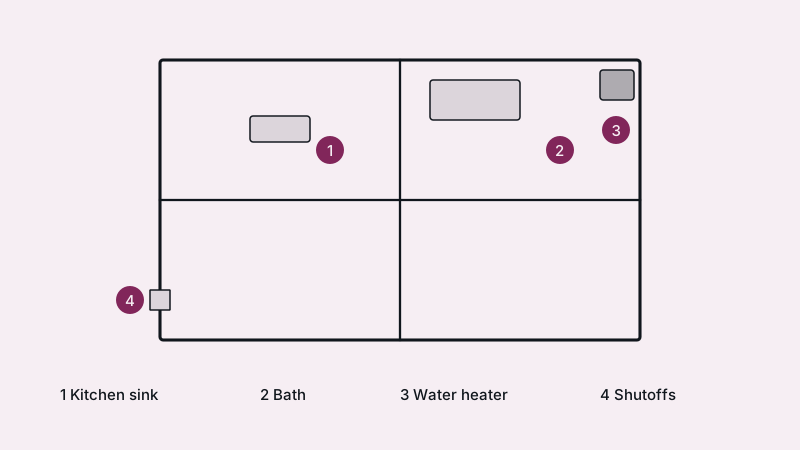
California puts plumbing in mobilehomes and mobilehome parks under HCD, the state housing department, through its Title 25 rules, so the city is not the only authority. A permit is required to install, build or alter plumbing equipment, and HCD or a local enforcement agency does the inspecting. A buyer's inspection is a separate, private check. Gas lines are a regulated trade of their own; the page on gas plumbers and what they may do explains that side.
Who inspects the plumbing in a mobilehome?
HCD or the local enforcement agency inspects permitted work and the park's utility systems; a buyer hires a private inspector or plumber for the home itself. HCD's park maintenance inspections cover general areas, buildings, equipment and utilities, plus each lot, and the agency issues permits for alterations to units and park systems.
Three different checks exist, and people often mix them up:
- Permit inspection: after plumbing is installed or altered under an HCD or local agency permit.
- Park maintenance inspection: HCD looks at the park's systems and each lot, including common problems at the lot such as a sewage leak at the drain or an open sewer inlet without a gas-tight cap.
- Private inspection: a home inspector or plumber you hire before buying or when something seems wrong.
HCD's resident guide mentions a three-quarter inch valved water outlet on each lot, which makes a quick check you can do yourself. If your home sits in a park, ask management and HCD who inspects what in that park before work begins.
When does mobilehome plumbing need a permit?
Installing, building or altering plumbing equipment requires a written permit under HCD's Title 25 rules, and no permit is needed to repair a mobilehome when original parts are replaced with equivalent ones. HCD has sole authority to permit and inspect alterations to the unit itself. For anything more than a straight swap, ask HCD or the local agency first.
This is where owners get caught: a new sink, shower or water heater location counts as an alteration, while replacing a failed cartridge with the same part generally does not. Gas piping and venting changes call for a permit, and the contractor needs the matching license class. A gas odor means stopping everything and getting out. The utility's emergency line, 1-800-427-2200, is answered by SoCalGas; use it from outdoors, and keep 911 for real danger.
What does a plumbing inspection look at, room by room?
Water supply, drains, fixtures, the water heater, shutoffs and the underside of the home. A good inspection checks pressure, leaks, pipe material, venting and the condition of the sewer connection, then reports what is safe, what is worn and what is not up to current rules. Ask what the report includes, since scopes differ.
A checklist for the walk-through:
| Area | What to check |
|---|---|
| Water supply | Pipe material, visible leaks, shutoff valve, pressure reading |
| Kitchen | Under-sink leaks, drain flow, disposal, dishwasher connections |
| Bathrooms | Toilet base seal, tub and shower valves, drains, stains on floors |
| Water heater | Age, rust, relief valve and pipe, strapping, venting, gas connection |
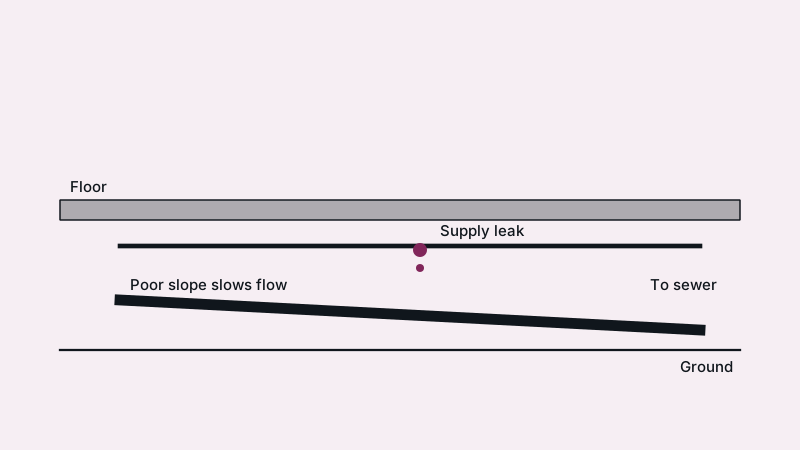
| Under the home | Wet insulation or belly wrap, sagging pipes, drain slope, cleanout |
| Outside | Lot water outlet, sewer inlet cap, hose bib, supply line to the home |
Hard water leaves scale, and Moulton Niguel Water District's recent report lists hardness near 9 to 18 grains per gallon by source for its service area, so ask whether fixtures show crust. A supply leak may appear only on the bill. EPA WaterSense suggests a two-hour test: note the meter, use nothing, and look again.
What problems turn up most in older mobilehomes?
Aging supply lines, leaks under the floor, slow drains from poor slope, water heaters past their prime and shutoffs that no longer close. The material of the supply pipe matters. Some older homes carry polybutylene, a plastic used from 1978 to 1995 that fails from oxidants in treated water, though not every mobilehome has it.
If you find polybutylene, or repeated leaks, ask the inspector or a plumber to report the pipe type and condition. Water heaters are a frequent item; the numbers are on the mobilehome water heater price page. New plumbing runs under a home are a larger project explained in how plumbing goes under a mobile home, and cold weather prep is in winterizing mobile home plumbing.
What does an inspection run?
Scope sets the price. A plumber who simply looks around makes a brief visit; threading a camera down the sewer line or running a leak test costs extra. Rates differ, so learn what the fee covers and if the findings come in writing. Figures are on the plumber inspection cost page.
For leak testing see leak detection cost. For an inspection or quote, use the price request page; someone local comes to visit. Weekday requests are read between 9 and 5. Work inside a mobilehome has to respect HCD rules, so say what kind of home it is and whether it sits in a park. The Capistrano Plumbing home page shows how visits work.
Common questions
Does a city building department inspect my mobilehome plumbing?
Usually HCD or a local enforcement agency that HCD has delegated does, not the city building division as it would for a house. Where they share responsibility, the local agency may handle some inspections. Ask HCD or your park which agency covers your address before pulling a permit or hiring someone.
Can an owner swap the water heater alone?
An equivalent replacement part may not need a permit, yet a change of type, location, gas hookup or venting counts as an alteration. Gas jobs need a contractor with the matching license class. Read HCD's requirements first, and see whether the plumber's quote covers the permit.
Is an inspection worth it before buying?
Yes, in most cases. Plumbing under a mobilehome is hard to see, and a leak or bad pipe can be costly. A private inspection or plumber's visit finds visible problems, and a camera or pressure test finds more. Ask for a written report you can use in negotiation.
Will the inspection check the gas lines?
An inspection may include eyeballing the gas connections, yet pressure-testing gas piping is regulated and left to a plumber holding the proper class of license. Never hunt for leaks with a flame. Gas odor: exit first, and use the SoCalGas emergency number, 1-800-427-2200, from outside.
What is the park responsible for versus me?
It depends on where the line is. HCD inspects park utility systems, and the park is responsible for common systems. Lines and fixtures on your lot and in your home are generally yours. Ask management for a map of the utility connections and the shutoff for your lot.
Sources
Updated