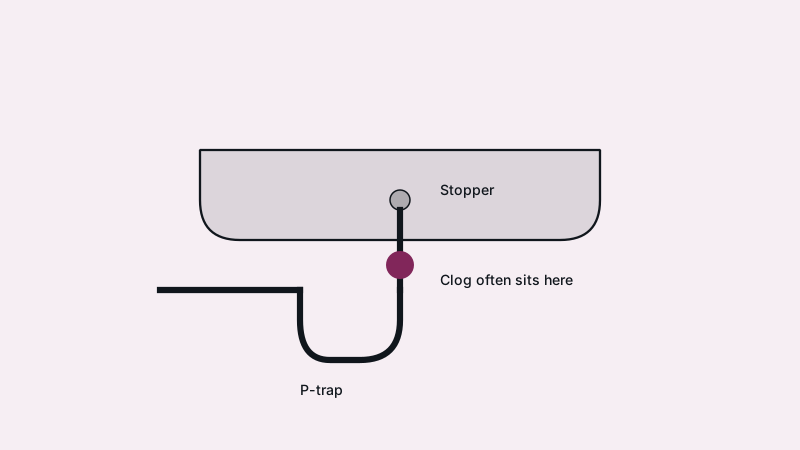
Think of the fix as a ladder with four rungs: stopper, plunger, trap, snake. Begin at the bottom rung and climb only while the basin stays full. In most bathrooms the blockage is hair glued together with soap film, lodged right beneath the stopper, which is why rung one is so productive. If more than the sink is slow, jump to our clogged toilet and drain plumber page.
Rung one: how do I clear the stopper and the hair under it?
Lift out the pop-up stopper, or unscrew it by turning it counter-clockwise, and drag the hair out with a bent wire, a barbed plastic strip or gloved fingers. Rinse everything under hot water and drop the stopper back in. For many slow basins, that alone brings the flow back within minutes.
Some stoppers are tied to a lever rod behind the faucet. Check under the sink: a small nut on the rod's clip lets you slip the rod out so the stopper lifts free. Photograph the arrangement first and keep the little parts in a cup so nothing rolls down the drain. The wad you pull out will look revolting, and that is a good sign.
Hardware stores sell barbed plastic strips for a couple of dollars. Feed one past the stopper opening, give it a twist and draw it up gently, so the hair stays caught on the barbs.
Rung two: how do I plunge a bathroom sink properly?
Stuff a wet rag into the overflow opening, add enough water to cover the drain, then press a flat cup plunger over it and pump hard about ten times. The cloth matters, since the overflow hole lets your pressure escape. Lift the plunger and watch whether the water falls.
The flanged plunger made for toilets seals badly on a flat sink floor. Keep your strokes short and steady, and avoid ripping the plunger off the basin on the upstroke. Two or three rounds are fair. A water level that never budges says the blockage is deeper, and more plunging is wasted effort.
Rung three: how do I take the trap apart?
Park a pail under the U-bend, unthread the slip nuts at each end, lower the bend and empty it. Brush out the bend and its short arms, rinse, refit and run the tap while you inspect every joint. Debris settles here first, so this rung often defeats a stubborn clog.
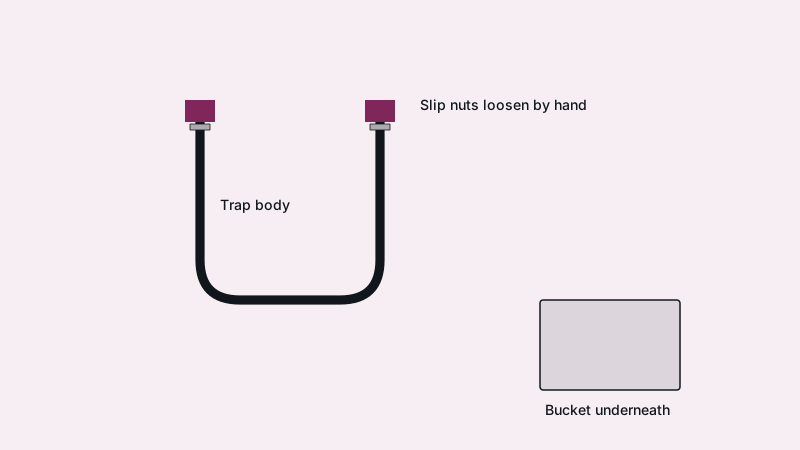
That bend, the trap, keeps a seal of water in place to hold back sewer gas, and Wikipedia counts drainage and venting among the basic parts of a plumbing system. Black sludge inside is normal. On the way back, make sure each washer lies flat, and snug the nuts by hand, since plastic threads crack if forced.
Watch out for these under the cabinet:
- Slip-joint washers have a taper that faces the joint.
- A pitted, crusted chrome bend costs less to replace than to scrub.
- A wall connection that weeps or crumbles is where you stop. Our guide to a leak under the sink picks up there.
Rung four: snake or chemicals?
Reach for a small hand-cranked snake before any bottle of chemicals. A short-cable auger slides past the trap arm and hooks or breaks the clog, with no caustic liquid left sitting in the pipe. Drain chemicals are hazardous for skin and eyes, can attack some fittings and are dangerous when two products meet.
If a cleaner already went down, tell whoever opens the pipe. Should you choose one, wear gloves and goggles, read the label closely and never plunge on top of it. Bacterial or enzyme products are milder but slow, so they suit prevention better than an urgent block. After the snake breaks through, withdraw it slowly and wipe the cable, otherwise the debris falls back and re-forms the clog.
How can I tell this is more than a sink problem?
If just one fixture is slow, the clog is local. If the tub gurgles when the sink empties, or several drains back up together, the blockage lies in a shared drain or the main sewer line, which needs a plumber with a long cable or a camera. A bubbling floor drain tells the same story.
Stop adding water once a lower fixture starts filling. Whose pipe is it? The pipe heading out of the house to the street is often the owner's up to a boundary, and sewer service differs by street here, so check your district bill or the City's utility list before phoning. A bathtub or shower with the same slow symptoms is covered in shower clogged drain.
When does a clogged sink need a professional?
Bring one in when all four rungs fail, when other drains are slow, when water rises back up, or when the pipes under the sink leak or crumble as you handle them. The plumber works a cable in from a cleanout or the trap, finds the cause and says what to change.
Ask for the price before work. CSLB expects a written contract once home improvement work passes $500, and a short drain visit can be quoted by phone. Tell us which fixtures are slow and what you tried through the quote request. For slow rather than blocked drains, see why a sink drains slowly, and for grease, the kitchen sink guide.
How do I keep the clog from coming back?
Fit a mesh strainer, wipe toothpaste and soap residue from the basin, and rinse the stopper monthly or bimonthly. Flush with hot tap water now and then. Keep grease, coffee grounds and wipes out of every drain. A minute of upkeep saves a visit.
In a shared bathroom with long hair in the mix, pulling the stopper weekly is realistic. Houses built from the 1960s to the 1990s around Mission Viejo often have original chrome traps, so swap a pitted one for plastic while it is off the wall.
Common questions
Will a plunger work with a pop-up stopper in place?
Only once the stopper is lifted out or opened. Block the overflow with a cloth and use the flat cup plunger. A closed stopper traps the pressure, and the seal fails. Put the stopper back afterward and run water to confirm that nothing leaks from the overflow slot.
Do baking soda and vinegar clear a slow sink?
The fizz may loosen light residue, but a wad of hair at the stopper or trap will not dissolve. Boiling water poured onto PVC can also soften it. Pulling the hair out, plunging or opening the trap works better and is kinder to the pipes.
Why is the basin still slow after I cleaned it?
Part of the blockage may remain past the trap, the drain may be laid at a poor slope, or the vent may be clogged. Work a snake in past the trap. If the slowness lasts, a plumber can test the vent and the branch, and several slow drains point to the shared line.
Can a clog make the drain smell?
Yes. Rotting hair and soap smell, and a seal that has evaporated after weeks of disuse lets sewer gas rise. Clean the stopper and trap, then let water run about a minute so the seal refills. A smell that lingers is worth a plumber's look at the vent.
This guide is one of many on Capistrano Plumbing.
Sources
Updated