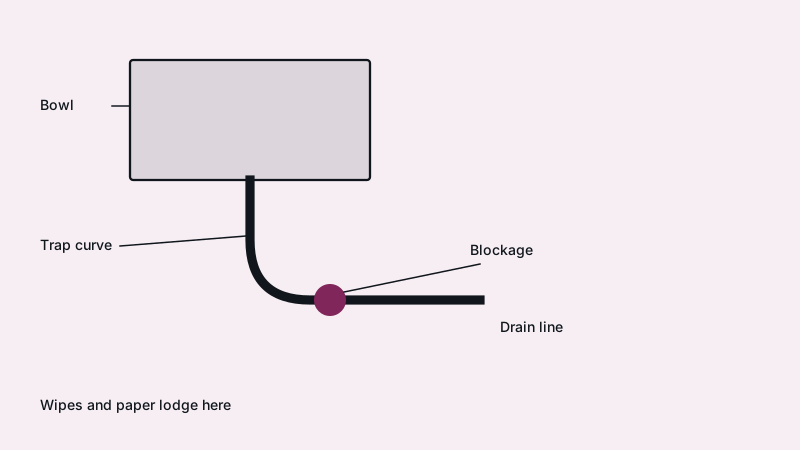
Hands off the flush handle. Whatever is lodged in the trap needs a way through, and another flush only adds water to a bowl that cannot take it. Push the flapper shut, grab a flange plunger and work it ten times. Stubborn? A toilet auger comes next. If a shower or floor drain also gurgles, skip all that and book a clogged toilet plumber, because the trouble sits downstream.
The bowl is nearly at the rim. What now?
Stop flushing, then stop the tank refilling: lift off the tank lid and push the rubber flapper onto its seat, or twist the little oval stop valve behind the base to the right. Water level in a stalled bowl often sinks a few inches on its own as it seeps past the blockage. Spread towels, line up a bucket, and put on rubber gloves.
If it still threatens to spill, scoop out a cup or two into the bucket to create plunging room. Keep pets and kids away, crack a window, and scrub your hands afterward, because bowl water carries germs.
Which plunger actually works on a toilet?
The flange plunger, a bell with a rubber sleeve poking out of its bottom. That sleeve slots into the drain opening and makes a seal; a flat-faced sink plunger lets the pressure escape and sprays water. Keep the bell submerged. If the bowl is too low, add some water first.
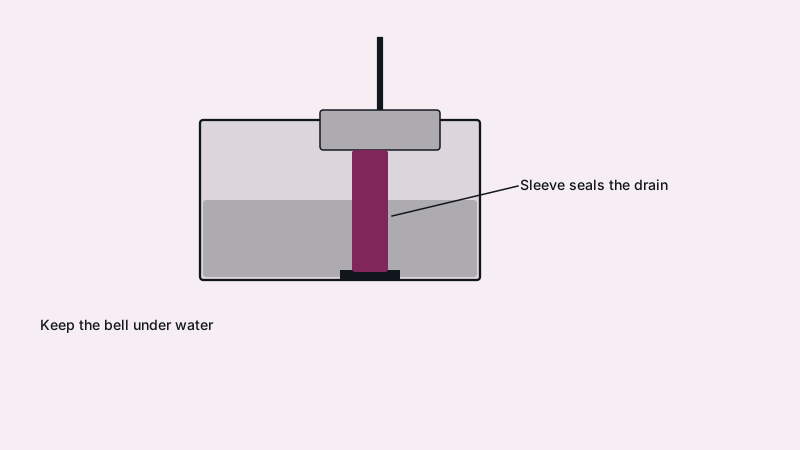
Set the plunger at an angle so no air stays trapped, press once gently, then pump hard in sets of about ten strokes, finishing each set with a firm upward pull. Success sounds like a gurgle and a rapid drop. Check with a half bucket of water poured from knee height before flushing for real.
What if the plunger does nothing?
Reach for a toilet auger, sold as a closet auger. Picture a coiled cable running inside a stiff tube, its bent end wrapped in rubber so it can wind through the porcelain trap without marking it. Insert the tip, crank the handle while pushing lightly, and feel for the blockage to give way.
Sink snakes are the wrong choice: bare steel scratches the bowl. When the tip meets something hard that will not budge, suspect a toy, brush or razor and quit. Pushing harder drives the object deeper into the line and turns a ten-minute fix into a pipe job.
Will soap and hot water help?
Sometimes, on soft paper-and-waste clogs. Squeeze in a good measure of dish detergent, tip in a bucket of hot-but-not-boiling tap water from hip height, and give it twenty minutes before the plunger goes back in. Anything near boiling risks a cracked bowl. Wipes and rags are not softened by any of this.
Leave caustic drain openers out of toilets. They irritate skin and eyes, can harm some pipe materials, and if the clog survives they leave a bowl of harsh liquid that makes the next attempt dangerous. If one went in already, mention it to whoever arrives.
What if the same toilet clogs every few weeks?
One clog usually has a nameable cause. A pattern suggests something else: wipes labeled flushable, a flush with too little punch, a partly blocked trap, a plumbing vent that is starved of air, or a sluggish drain line. Watch what goes into the bowl for a week before blaming the plumbing.
Roots, aged pipe and a belly in the sewer lateral produce repeat trouble too, especially around mature trees in older neighborhoods. A camera inspection will show the condition of the line. Other drains burping when the toilet empties is your cue to look past the bowl.
When does a plumber become the better choice?
Once plunger and auger have both been tried without luck, when a second fixture backs up, when the tub bubbles during a flush, when something may have been dropped in, or when sewage surfaces at a floor drain. Those signs mean a blockage in the line, which calls for a drain machine and frequently a camera.
Insist on a written price first. A sewer repair can run past $1,000, at which point only a contractor with a California license may take it on. Charges for the simple version of this call are explained in unclogging cost; a price request starts the visit.
What stops it coming back?
Only paper and human waste go down. Wipes, paper towels, cotton swabs and hygiene products belong in the trash can. Use less paper per flush, flush twice for big loads, and repair a weak flush, as described under toilet flush repair. A flapper that shuts early, or a tank that fills only partway, leaves the bowl without its push.
Running tanks matter as well. According to the EPA, a tired flapper can leak away thousands of gallons over a year; the fix is on the running toilet page.
Common questions
Can a sink snake stand in for a toilet auger?
Not safely. A bare sink cable scratches porcelain and may not turn through the trap. A toilet auger has a protective sleeve for this reason. Without one, you are better off pausing the job. Never force a cable that has stopped moving.
Is it fine to leave a clogged toilet until morning?
Usually, provided the water sits well below the rim and the supply valve is shut. Close the oval valve, put a note on the lid, and retry later. A soft clog sometimes loosens overnight. Any sewage leaking from the base or a floor drain cannot wait.
Why does the bowl drain slowly, with a gurgle?
Slow draining with a gurgle often signals a half-blocked trap, a clogged branch pipe, or poor venting. Plunge once. If it returns, a plumber can inspect. When the tub and sinks are slow too, the shared line or the main is the likelier culprit.
Who is responsible if the sewer main is blocked?
Location decides. Owners generally maintain the lateral inside their property line, while the city or a sewer district maintains the public main in the street. Have the plumber say which stretch is blocked, and call your sewer provider if it is the public one.
This guide is one of many on plumber mission viejo.
Sources
Updated