Sometimes, and the deciding facts are how the pipe failed and what your policy says. The state insurance department lists sudden, accidental water damage as covered and seepage on its generally-not-covered list. A pipe that broke suddenly under a slab is argued differently from one that wept for months. We are not an insurer and this is not advice; the policy and the adjuster decide. A plumber confirms the cause and cost, and the Capistrano Plumbing home page explains how our visits are set up.
Does a standard policy pay for a pipe under the slab?
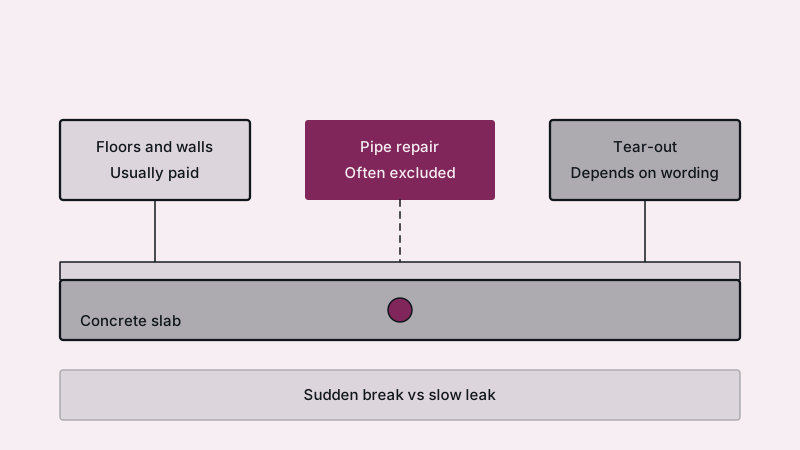
After a sudden break, many policies pay for the soaked floors and walls yet hold back on the pipe and on the work of reaching it. Wear, corrosion and gradual leaks are the usual exclusions. Whether the cost of breaking concrete to reach the pipe is paid, called tear-out coverage in some policies, depends entirely on the wording.
That list is the starting point. It also names wear and tear and mold as generally not covered, except that mold follows the cause when a covered peril started it. It also tells owners to ask the insurer whether a specific loss is covered and to request a full copy of the policy. The insurer must provide it free within 30 days, according to the department.
Why does "sudden" versus "slow" matter so much?
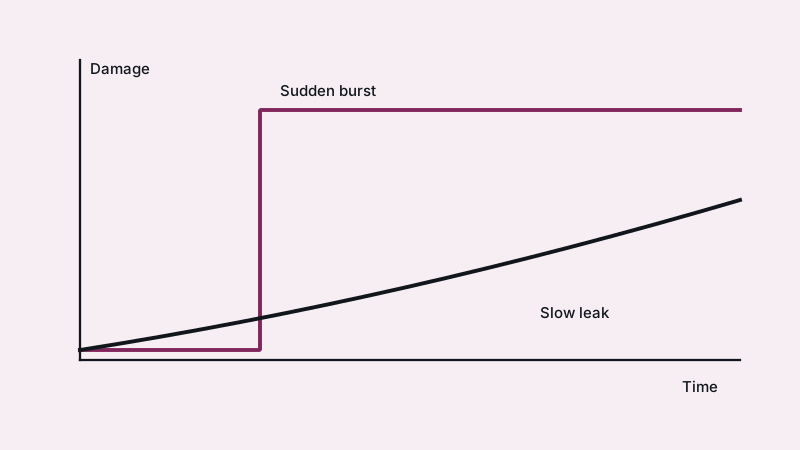
Insurers separate a burst, which they treat as an accident, from corrosion or seepage, which they treat as maintenance. Copper beneath a slab can pit for years before it starts leaking, and an insurer may call that the second kind even if you only noticed when the floor turned warm. Evidence of timing therefore matters.
Useful evidence includes water bills before and after, a plumber's written finding on the failure mode, photographs of the pipe section, and dates. A meter that keeps turning while everything is shut can signal a service line leak, according to Moulton Niguel's Fix-a-Leak guidance, so keep older readings and bills as a record of when things changed. In older Mission Viejo tracts with copper under the slab, pinhole leaks from internal corrosion are a known pattern, covered in copper pinhole leaks.
What damage is usually covered, and what is usually not?
The pattern is: damage to floors, walls and belongings from a sudden discharge may be covered, while the pipe repair, the tear-out and the slow-leak damage may not be. Mold follows the cause. Earth movement, flood and earthquake have their own exclusions, and slab heave or settling blamed on a leak can be a dispute.
Treat this table as a pattern only, because your own policy governs:
| Item | Often treated as |
|---|---|
| Water damage to flooring and drywall from a sudden break | Possibly covered |
| Pipe repair or replacement itself | Often excluded as wear and maintenance |
| Cost of cutting into concrete for access | Depends on tear-out wording |
| Damage from a long, slow leak | Often excluded |
| Mold from a covered loss | May follow the loss |
| Foundation movement | Frequently disputed or excluded |
The state's FAIR Plan basic policy covers fire and smoke but not water damage, so owners with that policy must add coverage. A 2023 court ruling upheld the Insurance Commissioner's authority to order additional coverages, including accidental discharge or overflow of water or steam.
What are the first moves if a slab leak is likely?
Turn the water off, save what can be saved and report promptly. The department advises halting a leak at its source and notifying the agent right away, as later damage might go unpaid when reasonable steps were skipped. Close the main, document everything, and have a plumber find and confirm the leak before anything is demolished.
Do these in order:
- Close the main valve and photograph the wet areas.
- Read your policy's water damage and exclusion sections.
- Report the loss to the insurer, giving facts and dates.
- Get a plumber's written finding on the cause and location.
- Keep receipts for drying and temporary repairs.
- Do not authorize demolition until you understand what the adjuster will accept.
For finding and pricing the leak itself, see leak detection cost, the guide to repairing slab leaks versus repiping and slab leak repair cost.
What should I avoid telling or doing during a claim?
Avoid guessing about the cause, minimizing or inflating, and signing anything you have not read. State what you saw and when. Do not discard the failed pipe section until the insurer has had the chance to see it, and do not start permanent repairs before documenting damage. Ask the adjuster to explain any denial in writing.
Disagree with a denial? The department's consumer hotline is 800-927-4357. The related guides on this site include does insurance cover a burst pipe and slab leak coverage. Need a repair quote? Put the details into the price request page and someone local arranges a visit with a quote in writing afterward.
Common questions
Could a claim raise my rates?
Possibly, and it can touch renewal too. Practices differ by company, so raise it with your agent first, particularly for a small loss. Weigh that against an unreported leak, which keeps damaging the house and may end up costing much more than any rate change.
Is leak detection covered?
Some policies pay to find the source of a covered leak, others treat locating the leak as a maintenance cost. The wording on access and detection costs is where policies differ most. Ask the insurer, and have the reply in writing before the plumber begins, because detection usually comes before the claim decision.
Does insurance cover the repipe?
Rarely the whole job. A repipe replaces pipes that are working or wearing out, which most insurers lump under maintenance. Some policies cover the section that failed in a sudden break. If the house has polybutylene or repeated pinholes, get the plumber's written report and ask the insurer what it will accept.
Does anything change for renters or HOA members?
A renter reports the leak to the landlord, in writing, and the landlord normally repairs the plumbing. A renter's policy covers belongings. In an HOA, the governing documents and the HOA's master policy decide who owns which pipe. Ask the HOA for the responsibility chart before assuming.
Who pays when the leak sits between the meter and the house?
Typically the owner. Moulton Niguel Water District assigns that segment to the customer, and other districts often follow the same split. A leak in that line may or may not fall under the policy, depending on the wording, so ask the insurer whether underground service lines are covered.
Sources
Updated