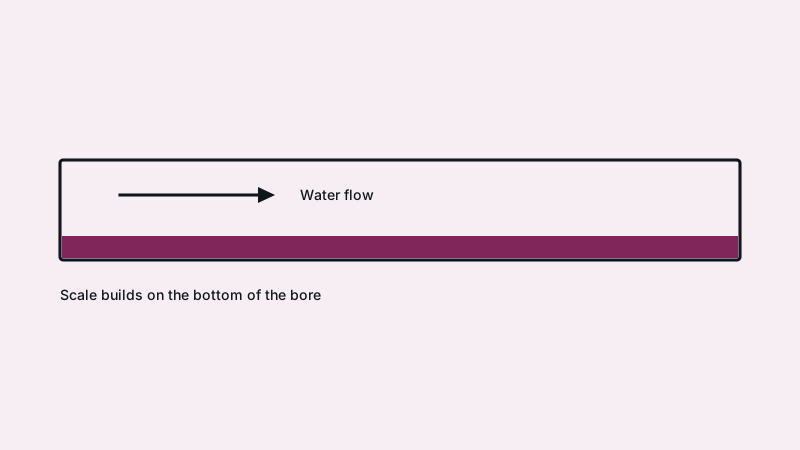
Scale shows up as a chalky crust wherever hard water dries out or gets hot: around faucet spouts, on shower glass, inside kettles and inside water heaters. It is mostly calcium and magnesium minerals. Mild acids dissolve it, which is why white vinegar and citric acid work and scrubbing alone mostly does not. The cleanup is simple, but it comes back until the water itself changes, and that is where a water softener comes in. If scale is clogging fixtures you want replaced, use the quote request.
What dissolves hard water scale?
A mild acid does the job. Plain white vinegar and citric acid each dissolve the calcium carbonate that makes up most household scale. Soak the surface or wrap it with a vinegar-soaked cloth for 30 to 60 minutes, then wipe or scrub lightly and rinse. Stubborn crust may need a second round.
Wikipedia describes hard water as water rich in calcium and magnesium that leaves scale clogging pipes and forms soap scum. It does not list cleaning methods, so this advice comes from general practice: stronger acids work faster but damage more finishes, and the mildest option that works is the right one.
How do I clean scale off faucets and aerators?
Twist off the aerator, the tiny mesh disc in the spout, let it sit in vinegar for sixty minutes, and brush off the loose grit. For the faucet body, wrap a vinegar-soaked paper towel around the spout, secure it with a rubber band, and leave it for up to an hour. Rinse well and wipe dry.
Do not leave vinegar on brass, nickel or specialty finishes longer than needed, since acid can dull a coating. Check the maker's care sheet, and test on a hidden spot. A faucet with a trickle of flow usually has a clogged aerator, which is also the cause behind many cases of low kitchen faucet pressure.
How can a showerhead be descaled with no tools?
Pour vinegar into a sandwich bag, tie it around the showerhead so every nozzle is under the liquid, and walk away for an hour. Take the bag off, let hot water flow briefly, and clear any holes still blocked with a pin or an old toothbrush. Unscrewing it and soaking is the stronger option for heavy buildup.
If the showerhead is plated or a special finish, shorten the time. Weak flow after cleaning means something else is wrong, so read low shower water pressure.
What works on shower glass and tile?
Glass tolerates vinegar well. Mist it with equal parts vinegar and water, give it a quarter hour, then wipe it down with a soft cloth or a nylon pad. Repeat on thick film. A squeegee after each shower prevents most of it.
Keep acids away from natural stone, such as marble, limestone and travertine, and from unsealed grout, because acid etches them. For stone, use a cleaner made for it. Keep vinegar apart from bleach and from any cleaner that contains bleach, since the pair can release chlorine gas.
How do I descale a water heater?
For a tank heater, flushing sediment through the drain valve once a year removes loose mineral and helps efficiency. Close the cold supply, turn the heater off at its breaker or gas control, point a hose from the drain valve toward a floor drain or the yard, and let it run until the water comes out clear. Scale that has hardened on an electric element needs the element removed or replaced.
The anode rod is a related part, because it is consumed by the tank's water chemistry, as covered in anode rod replacement. Heavy scale shortens heater life, and the lifespan question is taken up in when a water heater needs replacing. Tank draining is within reach for many homeowners, but gas and electrical connections are not for guessing, so call a plumber if unsure.
What about a tankless heater?
Tankless heat exchangers are small, so they feel scale more. Makers usually describe a flush in which a mild acid such as vinegar is circulated by a small pump through hoses clipped to the service valves. Follow the manual for your model, since the steps and volumes differ.
If the heater is already showing error codes or reduced flow, the cause may be scale or a failure, and a plumber can tell which. See tankless heater repair cost for what repair involves.
What is the hardness of Mission Viejo water?
It varies with the district that serves your address, and we will not quote a hardness number we have not read ourselves. Mission Viejo's utilities page names four districts that serve the city: El Toro, Moulton Niguel, Santa Margarita and Trabuco Canyon. Every one of them puts out an annual report with a hardness line.
The USGS scale, as Wikipedia gives it, labels water as moderately hard from 61 to 120 mg/L, hard to 180 and very hard beyond that. Once you have your number, you can guess how quickly scale will return. The same article quotes the World Health Organization as seeing no convincing evidence of health harm from hardness, which makes this a nuisance and equipment matter.
When is a softener better than cleaning?
When the scale returns within weeks, when it is shortening the life of heaters and appliances, or when you have the time cost of descaling every month. In a salt-based softener, resin beads exchange calcium and magnesium for sodium or potassium, and Wikipedia reports a big drop in limescale formation. It does not remove scale already formed.
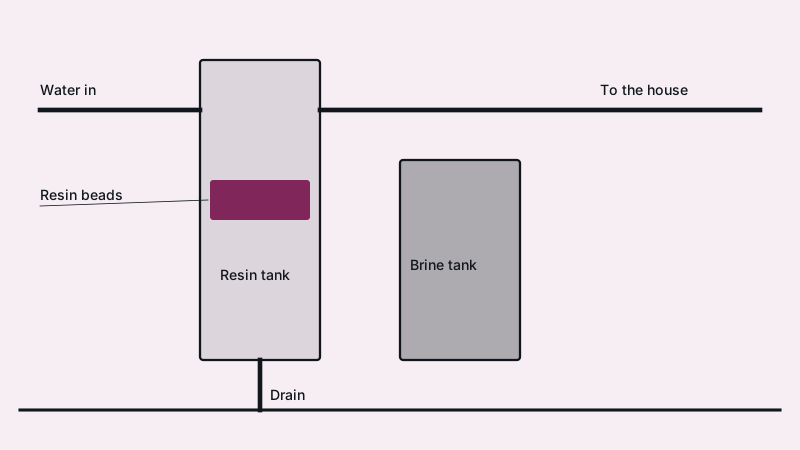
Price and installation details are in water softener installation cost, and ways to slow buildup without one are in hard water scale prevention. Softened water is not for everyone, such as people on strict low-sodium diets, as Wikipedia notes.
Common questions
Which product clears scale quickest?
Stronger acids act faster, yet vinegar or citric acid is the safe place to start on most household surfaces. Soaking beats scrubbing for speed. Heavily crusted fixtures may need two soaks, or a purpose-made descaler used exactly as its label directs.
Can vinegar harm any of my fixtures?
Some, yes. It is fine on glass, many chrome surfaces and plastic, but it can dull certain brass, nickel and specialty finishes, and it etches natural stone. Check the maker's care guide, keep soak times short, and rinse thoroughly afterward.
Can scale damage my pipes?
Wikipedia says hard water leaves scale that can clog pipes, which narrows them over time and reduces flow. Heated surfaces such as heater elements and heat exchangers gather it faster. Most households notice it first at fixtures, then in appliance life.
Does descaling keep scale away for good?
No. It comes back while the water stays hard. A squeegee, routine descaling and a softener each cut it down, and the right mix depends on your hardness figure and on how much the buildup bothers you. Measure the problem first, then decide how much effort it deserves.
This guide is one of many on Capistrano Plumbing plumber.
Sources
Updated