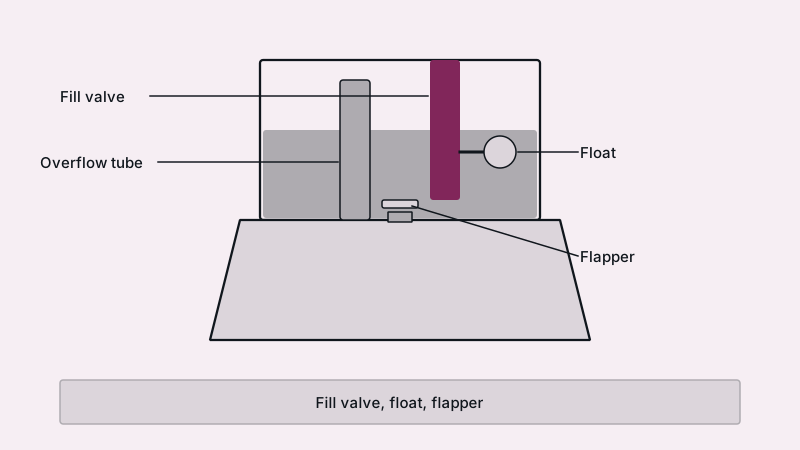
When the tank hisses long after the flush, refills in slow motion, dribbles into the overflow pipe or runs without end, the fill valve is the usual suspect. It can often be adjusted, and a new one is a half-hour swap with a wrench and a sponge. For a handyman-free option, see how a visit works on the toilet repair page.
How can I tell the fill valve is at fault and not the flapper?
Listen first. A continuous hiss or trickle with a full tank, water trickling down the overflow pipe, a tank that takes minutes to fill, or filling in spurts all say fill valve. A leaking flapper looks different: the tank level falls slowly, and the valve kicks on every few minutes to make up the loss.
Settle it with the EPA's dye test. Tint the tank water with a few drops of food dye, leave the lever alone for ten minutes, then check the bowl for color. Color means flapper. If the tank water creeps up level with the overflow pipe's top, the valve is not closing. Flush when the test ends or the dye may stain the tank.
Does it need replacing, or only adjusting?
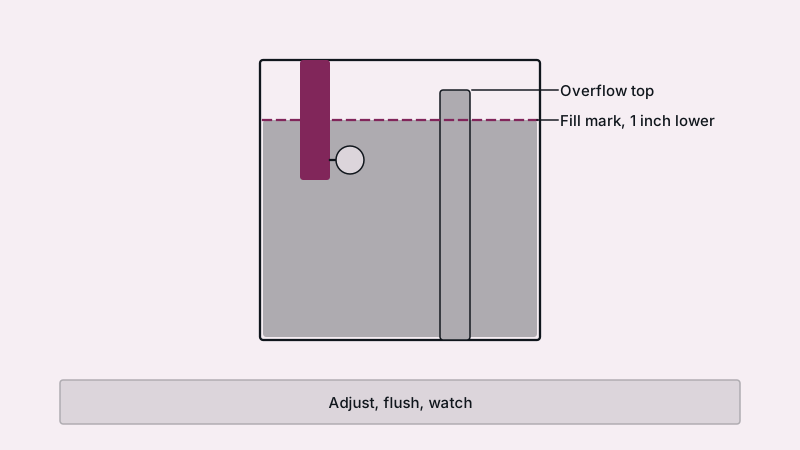
Adjustment solves a lot. Most valves have a screw, a clip or a sliding float to set the fill height, which should settle about an inch beneath the overflow pipe's top edge; many tanks have a fill mark molded inside, and the instructions on the valve say the same. Drop the float slightly, flush, watch.
Grit is the other cheap cure. With the supply off, pop the cap per the maker's steps, let a burst of water flush debris out into a cup, and put it back. Cracked seals and brittle old plastic will not hold an adjustment, so replace those.
Which parts and tools does the swap need?
A universal fill valve sized for your tank, an adjustable wrench or slip-joint pliers, a sponge, a bucket, old towels, and a braided supply line when the current one is stiff or crusty. Boxes usually include the tank washer, locknut and a clip for the refill tube.
Check what you have before shopping. A tall plastic tower is a modern fill valve; a metal arm with a floating ball is an old ballcock. Either can be swapped for a universal tower. Bring the old part, or a photo of it, when you shop.
How do I put the new valve in?
The job runs in eight moves: shut and drain the tank, lift the old valve free from below, place the new one at its proper height, reconnect the supply and refill tube, then test for leaks. Work slowly, keep the tank dry while you work, and stop tightening at snug, because plastic nuts and porcelain tanks both crack.
- Close the oval stop valve on the wall and flush to empty the tank.
- Sponge out the remainder so the tank bottom is dry.
- Unscrew the supply line at the old valve's tail, under the tank.
- Loosen the big locknut beneath the tank and draw the old valve upward.
- Drop the new valve through the same hole and set its height per the instructions.
- Hand-tighten the locknut, add one more quarter turn, and stop there.
- Reattach the supply line, then snap the refill tube's clip onto the overflow pipe, keeping its tip above the waterline.
- Open the stop valve gently, set the water level, flush several times, then run a dry paper towel around every joint to catch seepage.
Is this the moment to change the supply line?
If it is braided and several years old, kinked, or crusty at the nut, yes. A failed supply line dumps water fast, which makes it the classic toilet burst pipe story, and a new one is among the cheapest forms of flood insurance. Pick a length without sharp bends, snug it by hand, then give a small wrench turn.
Trouble at the wall valve, such as a handle that will not seal or a drip when it is turned, is another problem. It needs replacing, and since it ties into the house supply, that is plumber work. Also see toilet leak repair for leaks lower down.
What about the flapper and the tank gasket?
Look at both while the lid is off. A warped or crusty flapper lets water creep into the bowl, which makes the valve refill the tank again and again. In EPA terms, a worn flapper can leak thousands of gallons over twelve months. Replacement clips onto the overflow tube in minutes; flapper repair covers sizing.
A puddle around the tank bolts points to the gasket or bolt washers where tank meets bowl. That repair means lifting the tank off, so allow extra time. The toilet keeps running page orders these checks from easiest to hardest.
Does a running toilet really raise the water bill?
It can, and silently. A tank that keeps topping up every few minutes burns through water with only a faint sound as evidence. The EPA's average for home leaks tops 9,300 gallons every year. After a surprise bill, check the toilets first, then read the meter after two hours with every tap closed.
Irrigation swings with the season, so measure this period against the matching month a year ago. Two pages help rule out other causes: a leaky faucet and the bill and fixing a running toilet.
Common questions
What is a fill valve's lifespan?
No standard figure applies, and hard water, grit and chlorine all age the rubber seal. Many valves last several years before the seal gives out. On an older toilet, change valve, flapper and supply line together so you are not reopening the tank next month.
Why is my tank refilling so slowly?
Most often the stop valve is only partly open, grit is blocking the valve, the supply line is kinked, or pressure at the house is low. Open the valve fully, clear debris and straighten the line. If every fixture runs weak, the cause lies elsewhere in the plumbing.
Does insurance pay for a burst supply line?
Sudden water damage from a failed line is often the kind of event home policies cover, though terms and wear exclusions differ. Your insurer has the answer. Photograph the damage and shut off the water before anything else. Swapping old lines before they fail avoids the question.
What jobs here need a plumber?
A seized stop valve, a cracked tank or bowl, seepage at the floor, or a seized shutoff. A plain valve swap sits well beneath $1,000, the mark where California begins requiring a contractor license. A price request lets us arrange the visit.
For the wider picture, start with Capistrano Plumbing.
Sources
Updated